Traffic without conversions is like filling a bucket with holes, because no matter how much water you pour, it continues to leak. The bucket may look busy from the outside, but inside, the water level barely rises, which illustrates perfectly why website conversion optimization services are essential.
Plenty of sites manage to get visitors, yet the problem is that not enough of those visits turn into sales, sign-ups, or leads, and that is where conversion rate optimization (CRO) proves its worth. CRO is the process of taking what you already have and making it perform better. It’s guiding visitors from “just looking” to “I’ll take it” without pushing, tricking, or adding unnecessary noise. When done right, CRO feels natural. It’s invisible in the best way, like a shop assistant who appears at the right moment with exactly what you were looking for.
If your traffic is growing while your revenue graph remains flat, CRO is not a “nice to have,” it is survival.
Understanding CRO: Calculate and Optimize for Success
Let’s begin with the numbers. Conversion rate optimization measures how many visitors take the action you want (whether that is purchasing, subscribing, or downloading). The calculation is simple:
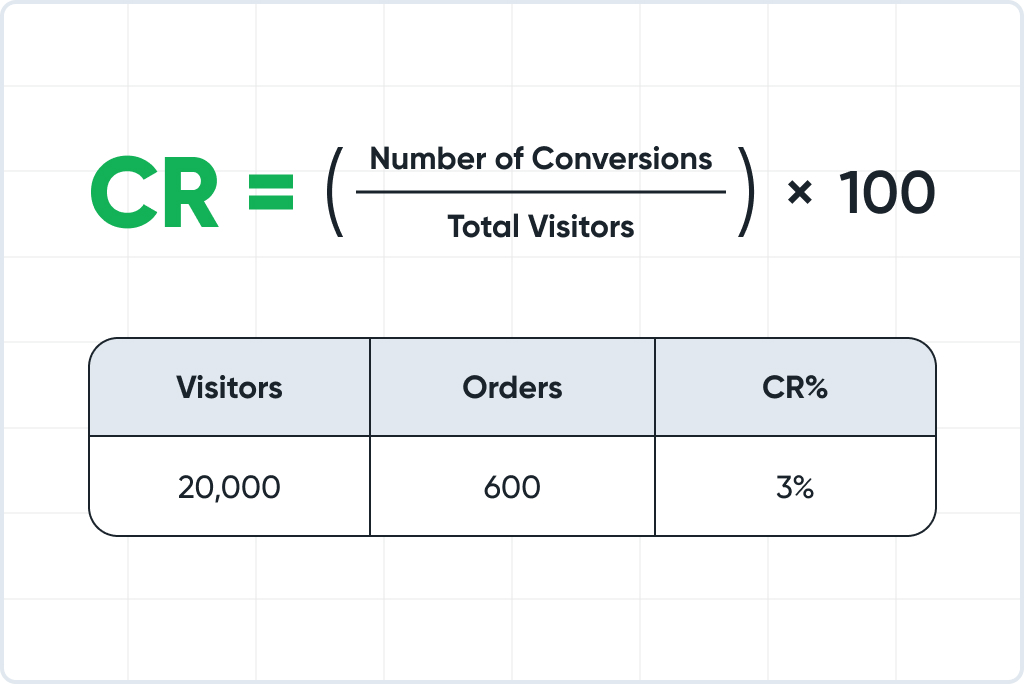
Here’s a calculated conversion rate for an e-commerce example: Suppose you run an online store, and last month, 20,000 people visited, while 600 placed an order. That’s (600 ÷ 20,000) × 100 = 3%. Now here is why this matters: if you increase that rate to 4%, you add 200 extra orders without touching your advertising budget. If your average order value (AOV) is $80, that results in an additional $16,000 in revenue, demonstrating the true power of conversion optimization.
However, CRO is not only about moving a button higher on the page or changing its color. A huge part lies in SEO, which ensures you bring in the right traffic in the first place. Attract people who already have buying intent, and every design tweak becomes far more effective.
Why CRO Is a Non-Negotiable Growth Lever
In marketing, there is often a fixation on “more”: more clicks, more impressions, more traffic. Yet more of the wrong thing is nothing more than wasted potential. Without CRO, your ads and content work harder than they should, and you end up spending more to achieve less.
The benefits of conversion rate optimization are measurable:
- Acquisition costs drop because you get more value from every visitor.
- Return on investment (ROI) increases without raising ad spend.
- You gain insights into your customers’ real behavior (what they click, what they ignore, and what makes them hesitate).
- Small wins compound over time, eventually stacking up into serious growth.
For conversion rate optimization for online stores, the gains can be even more dramatic. Tweaks that shave seconds off load times, remove friction in checkout, or make shipping costs visible early can turn browsers into buyers almost instantly.
Master CRO: Key Steps to Improve Website Conversions
Optimizing conversion rates is not about making random design tweaks; it is about understanding behavior, testing hypotheses, and iterating intelligently. Here is how to improve conversion rate optimization in practice.
- Analyze the Current User Journey
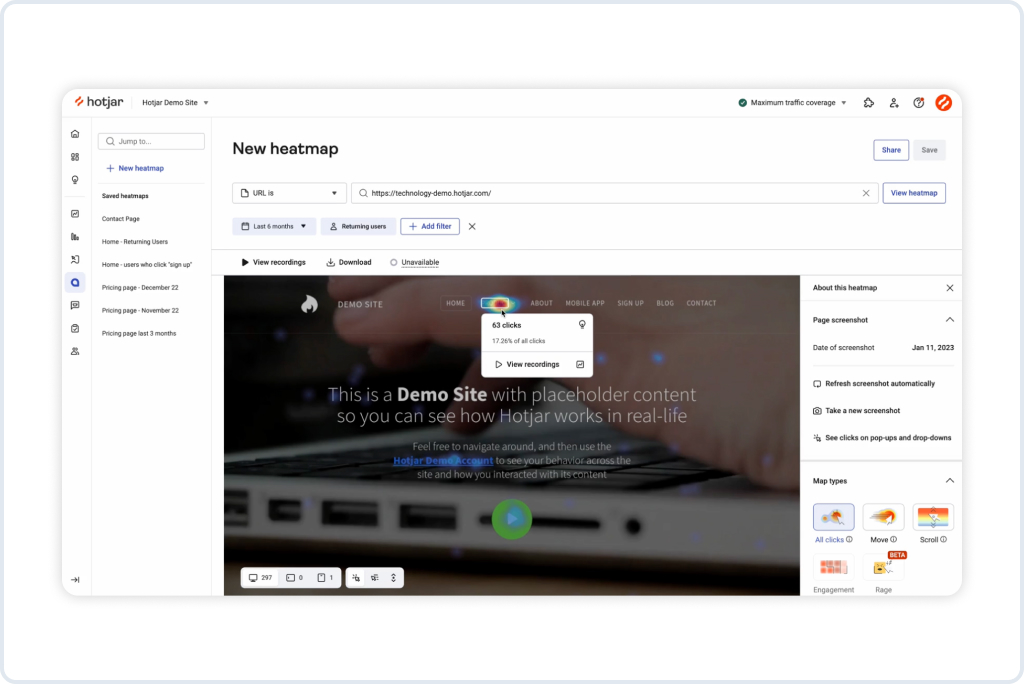
Before fixing anything, figure out what is broken. Use heatmaps, session recordings, funnel analysis, and form tracking to see where users drop off.
Look for:
- High-exit pages
- Rage clicks or dead clicks
- Bounce rates on key landing pages
These are red flags that call for conversion optimization and search engine optimization (SEO).
Do not rely solely on aggregate data; dive into specific user sessions, because sometimes one small layout glitch on mobile is costing you thousands.
- Identify Your Primary Conversions
What is your actual goal? For e-commerce, it might be a completed purchase. For software as a service (SaaS), it could be demo bookings. For blogs, it might be email signups.
Know what matters before you optimize. Оtherwise, you are solving the wrong problem.
- Prioritize High Impact Pages
Start where the money is. Focus on optimizing pages that drive:
- The most traffic
- The most revenue
- The most drop-offs
These are your best candidates for conversion rate optimization.
In fact, most brands have a few high-traffic pages that get ignored because they “look fine,” which is a missed opportunity.
- A/B Test Thoughtfully
CRO is not about guessing; it is about testing, and tools like Google Optimize, Convert, or VWO let you A/B test headlines, calls to action (CTAs), images, layouts, and more.
Test one change at a time and do not end tests too early; let the data speak, because a winning variation might take at least two weeks, yet you will not know unless you let it run.
Remember that the best test idea is often the one based on user feedback. If customers say they cannot find info, then put it higher. If they abandon shipping, test clearer copy or earlier cost disclosures.
- Simplify, then Simplify Again
People bounce when things are complicated, and too many fields in a form or too many steps to check out is a CRO killer.
Cut steps, enable autofill fields, offer guest checkout, and use progress bars, as every friction point removed results in a higher conversion rate.
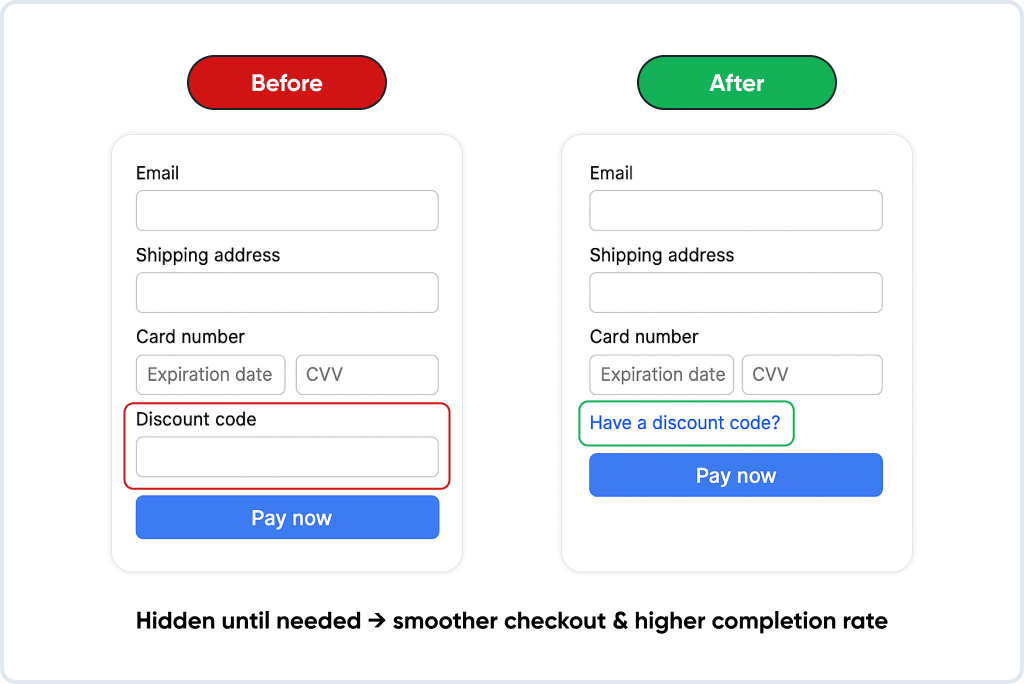
Even tiny things (such as hiding the discount code box until it is needed) can improve completion rates because they reduce anxiety (“Wait, do I need a code to get the good price?”).
- Leverage Trust Signals
Nobody converts if they do not trust you.
Add:
- Reviews and testimonials
- SSL/security badges
- Money-back guarantees
- Clear contact info
These might sound basic, but they’re crucial. Especially for conversion rate optimization for online stores.
Pro tip: Put testimonials next to CTAs, not just on a testimonials page. They reinforce intent in the moment.
Best Practices for Improving CRO on Websites
There is no single silver bullet, but there are a few reliable patterns we see across high-converting websites:
- Clear and concise messaging above the fold.
- A compelling CTA that aligns with user intent.
- Clean design with minimal distractions.
- Mobile-first layout with fast loading speed.
- Use of dynamic elements like video, tabs, or FAQ toggles to minimize visual overload.
These best practices are not just theoretical. They are grounded in thousands of real tests across eCommerce and SaaS brands. Adopt these patterns, then iterate.
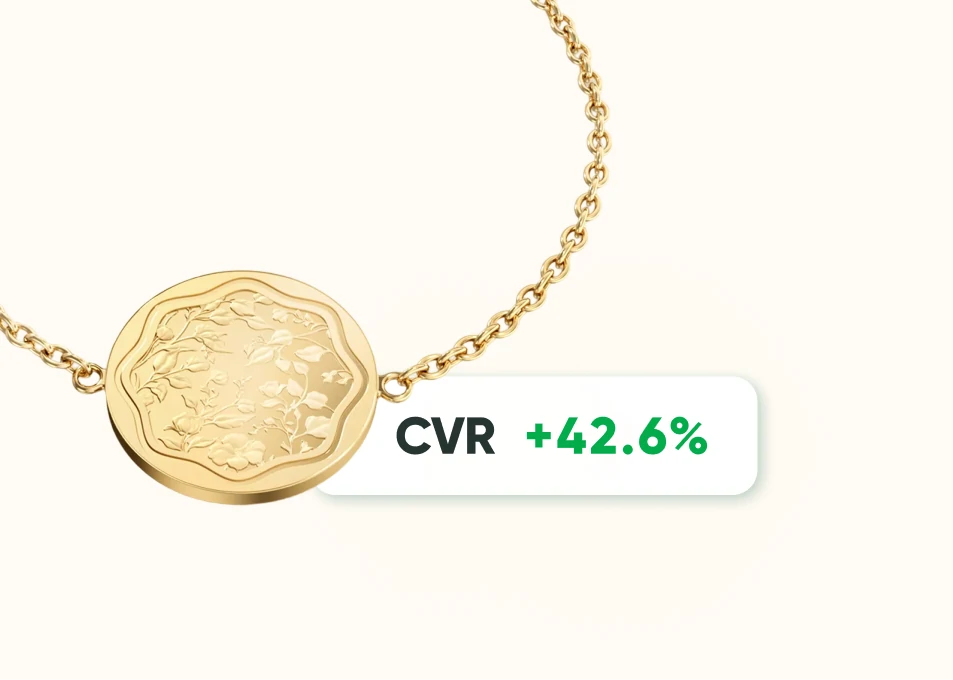
- +42.6% product page engagement
- +35.9% international conversions
- -18% cart abandonment
How to Improve Conversion Rate Optimization with Strategy
Conversion rate optimization is not just tactical, because the best gains come from well designed strategy. This is where conversion optimization strategies come in. They’re not random A/B tests, they’re structured plans based on data, audience insights, and long-term business goals.
Some of the most effective strategic approaches include:
- Map content to funnel stages: awareness, consideration, conversion.
- Personalize pages based on referral source (e.g., ad visitors vs. organic search).
- Launch experiments in cohorts (returning users vs. new users).
- Build out post-purchase flows to increase retention and referrals.
Tactics are how you start, while strategy is how you scale. If your focus is on SEO conversion rate optimization, strategic keyword mapping, intent-driven CTAs, and schema-enhanced SERP listings can all boost conversions before visitors even arrive on the site.
Boost Your Business: Simple Tips for Effective CRO
Here are quick wins that have consistently improved CRO across dozens of websites:
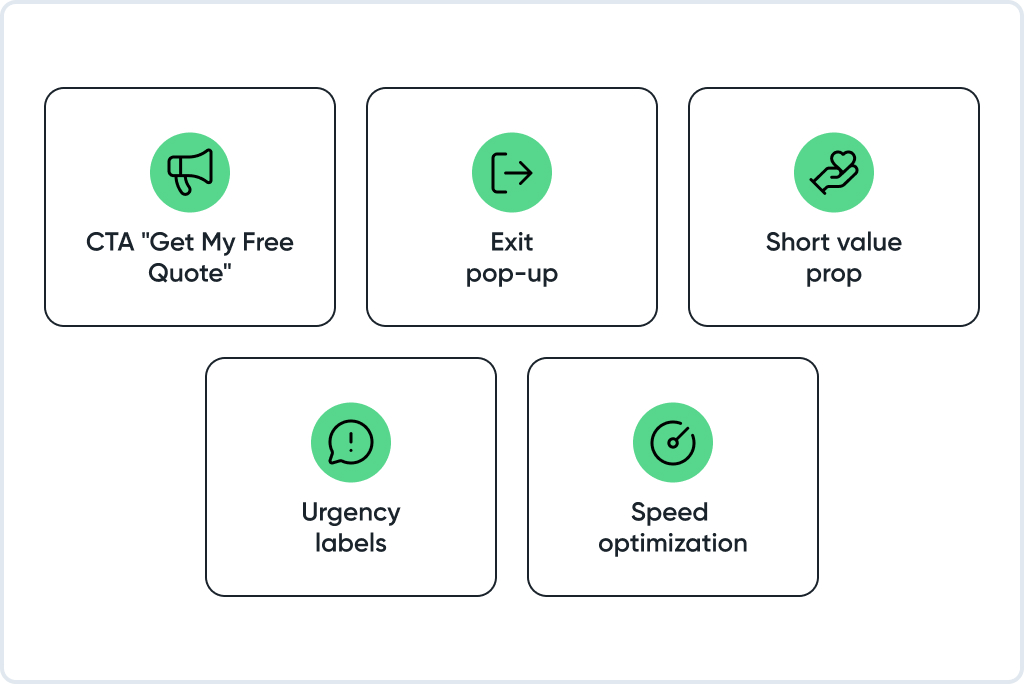
Do not forget about content. Blogs with strong CTAs, inline banners, or sticky sidebars can convert surprisingly well. Good content paired with optimized user experience (UX) is a quiet CRO engine.
Want more traffic and better conversions? Combine your CRO and search engine optimization (SEO) efforts. This is where conversion optimization SEO gets powerful: relevant, well-structured content + optimized UX = results.
Website conversion optimization services can often help companies identify and execute these opportunities faster, so you do not have to manage everything alone.
The Benefits of Conversion Rate Optimization
If you are still not convinced CRO is worth your time, here is what it actually delivers:
- Higher return on investment (ROI) from your existing traffic.
- Lower cost per acquisition (CPA).
- Better user experience, resulting in fewer support tickets.
- More sales without requiring larger advertising budgets.
- Stronger SEO performance, as Google rewards engagement.
- More data for future growth decisions.
- Deeper customer insights through behavior-based experiments.
If you are working with a conversion rate optimisation company, they should demonstrate improvements across multiple metrics, not just click through rates (CTR) or visual design changes. They should also help you build a repeatable, testable CRO process rather than relying on best guesses.
Final Thoughts: Don’t Just Drive Traffic, Make It Count
Traffic is only the spark; CRO is the flame that turns it into business results. If you invest in content, ads, or SEO but fail to optimize for conversions, you are essentially paying for visitors who leave without taking action.
The best way forward is to begin small. Run an A/B test on a headline, refine your checkout flow, or take a hard look at your most visited page as if you were a first time visitor. Better yet, ask your customers why they decided not to complete a purchase and apply those insights directly.
If you are unsure where to start, our Gomage website conversion optimization service can provide direction. Your audience is already arriving at your site; now the goal is to transform more of them into paying customers.
FAQ
SEO helps people find your website: it’s about showing up where it matters. CRO, on the other hand, is about what happens once they land. Will they click, buy, sign up? Or leave? When both work together, traffic turns into real results.
Just divide the number of purchases by the number of visitors, then multiply by 100. If 1,000 people visit your store and 50 buy, that’s a 5% conversion rate. In CRO, even a 1% gain here can mean huge revenue jumps, without touching your ad budget.
Start with what’s obvious. Move your CTA where it’s impossible to miss, show costs early, trim extra form fields. These little fixes often drive real change, and because they’re easy to test, they’re a smart first step in any conversion optimization strategy.
Many businesses test everything at once, hoping to speed up results. The problem is, you can’t learn which change made the difference. Another classic mistake is ignoring mobile optimization. True CRO is about methodical testing and following best practices for improving CRO on websites, not guesswork.
If you’ve improved speed, simplified your funnel, and still aren’t seeing growth – yes. A conversion rate optimisation company brings fresh perspective, better tools, and a clear process. It’s not about magic tricks. It’s about finding the leaks you don’t even see.
Some changes (like rewriting a CTA or adding a review) can lift results in days. Bigger shifts take weeks or months, especially if you’re redesigning checkout or aligning CRO with SEO. But when it works, those numbers don’t just spike, they stick.
Yes, and not just a little. Conversion rate optimization for eCommerce doesn’t stop at checkout. A seamless post-purchase experience, useful follow-ups, and thoughtful offers make people want to come back. That’s not luck, that’s good UX doing its job.
Definitely. Better UX means lower bounce, faster loads, higher engagement – all things Google loves. When your site performs well for users, it performs better in search. That’s why conversion optimization strategies often lift rankings too.
Absolutely. Smaller sites don’t have traffic to waste. Double your conversion rate, and you double your revenue, even if your traffic stays the same. Website conversion optimization services help small teams do more with less.
A one-time test might move the needle, but a long-term strategy keeps your site sharp as markets shift. Conversion optimization strategies are how good businesses stay great, not by guessing, but by learning and improving all the time.