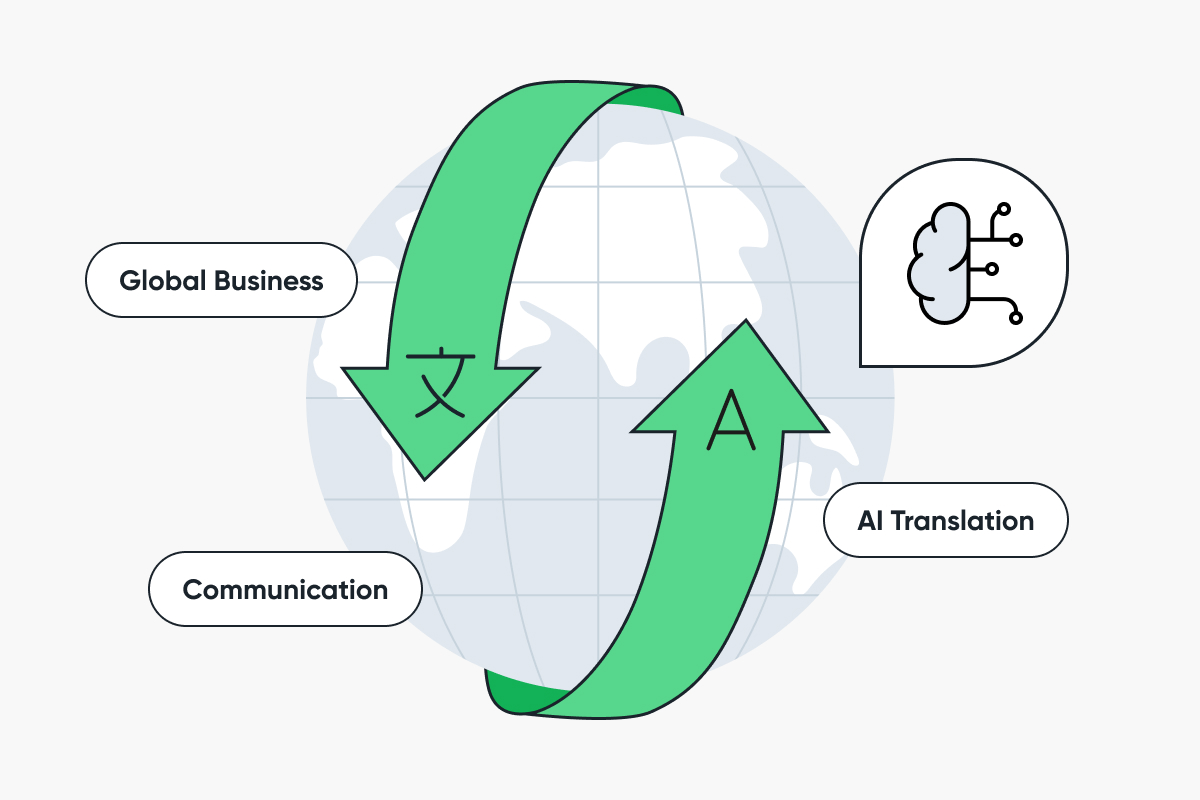
Expanding into new markets usually exposes the same friction point. Content moves fast, but translation does not. AI translation helps close that gap.
Product descriptions change weekly. Marketing teams update campaigns across regions simultaneously. Support articles evolve as products evolve. When translation sits outside that rhythm, delays start to stack up.
The demand behind this shift is visible in market data. The global language services market is projected to exceed $ 75 billion in 2025, reflecting steady growth driven by digital expansion and localization needs.
Machine translation itself has grown into a multibillion-dollar segment, surpassing 1.5 billion dollars in 2024 as businesses integrate AI into operational workflows.
What changes for companies is practical, not theoretical. Translation becomes part of daily operations. AI language translation tools connect to e-commerce platforms and content systems, so updates do not wait in a queue. The goal is alignment and speed, not novelty.
The Role of AI in Localization
Localization is more than translation. It includes cultural nuance, terminology consistency, tone alignment, and technical integration across platforms.
The role of AI in localization is not to remove human input. It is to make localization scalable.
Traditional localization models struggle with:
- frequent content updates
- product catalogs with thousands of SKUs
- multilingual customer support
- CMS-based websites with dynamic content
AI translation systems help by:
- maintaining terminology consistency across large datasets
- adapting translations based on industry-specific vocabulary
- integrating directly into content management systems
- reducing turnaround time for updates
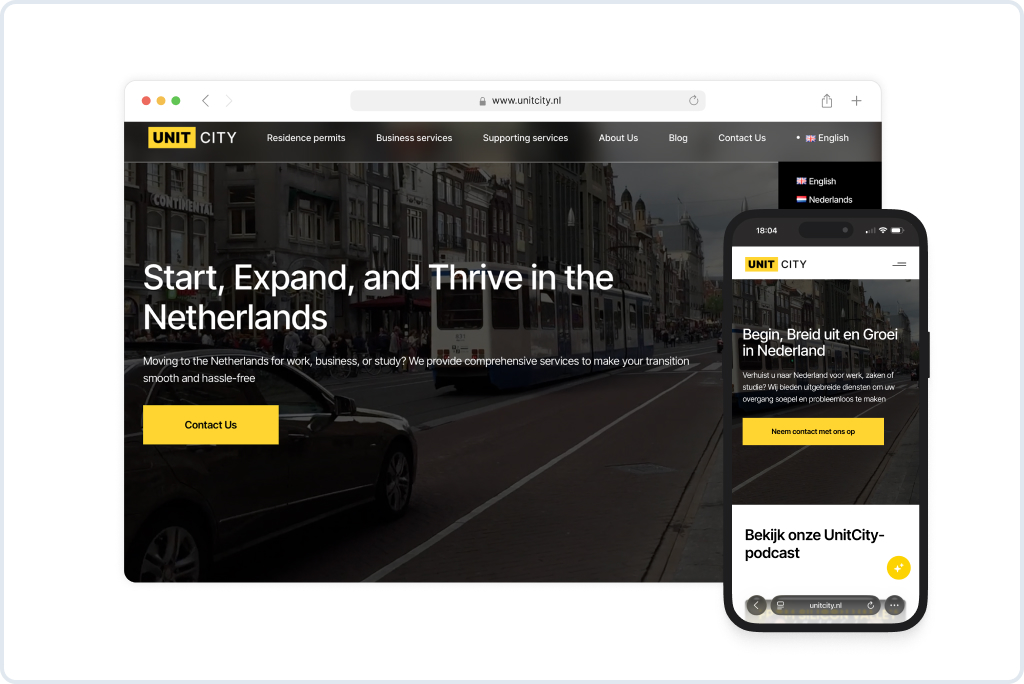
For example, GoMage developed an AI-powered multilingual WordPress plugin for UNIT.City, enabling automated multilingual content handling inside the CMS without constant manual intervention.
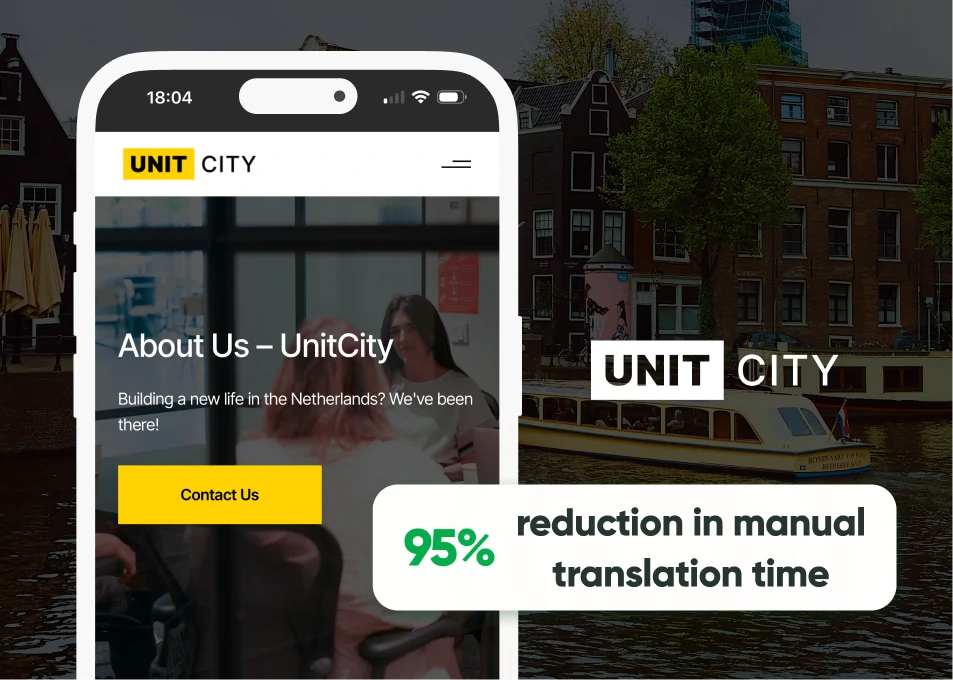
- 95% reduction in manual translation time
- 30 seconds average translation time
- 18 languages added
How AI Translation Works for Businesses
Understanding how AI translation works for businesses helps clarify why it is different from basic online translation tools.
Modern machine translation systems rely on neural machine translation models trained on massive multilingual datasets. These models learn patterns in grammar, syntax, and context rather than translating word-for-word.
In a business setting, AI translation typically works like this:
- Content is pulled automatically from a CMS, ERP, or product database.
- AI models generate contextual translations.
- Terminology databases ensure brand consistency.
- Optional human review is applied where necessary.
- Translated content is automatically pushed back into the system.
This process is often referred to as translation automation. It reduces manual handling and supports continuous updates instead of batch translation cycles.
In one of GoMage’s projects, an AI-powered translator assistant for a building materials store helped manage large volumes of product data efficiently, reducing delays caused by manual translation workflows.
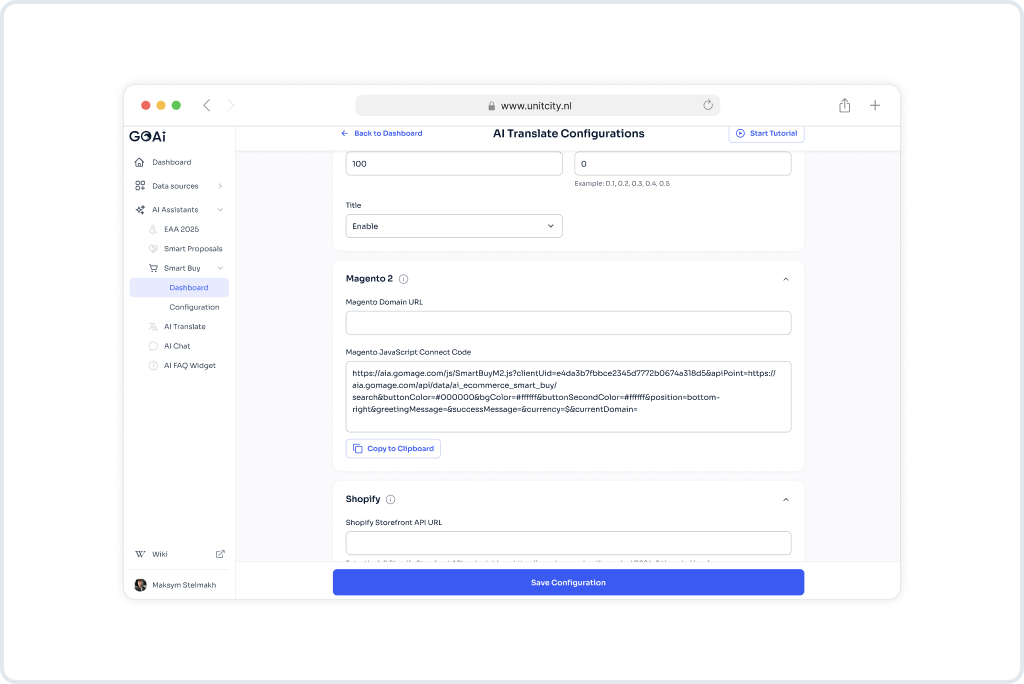

- 30,000+ pages translated automatically with high accuracy
- Less than $25 cost to translate all product and blog pages
- 100% complete translations via error-handling system
Real-Time Translation for Global Companies
One of the most significant advancements is real-time translation for global companies.
Real-time translation supports:
- live chat with international customers
- multilingual internal communication
- dynamic product updates across regions
- global marketing campaigns launched simultaneously
The real-time translation benefits are especially visible in e-commerce and SaaS environments where content changes frequently.
Instead of waiting days for translated updates, companies can deploy changes instantly across markets. This supports operational agility and faster international scaling.
AI vs Human Translation Accuracy
The discussion around AI vs human translation accuracy is often framed as a competition. In practice, it rarely works that way.
Human translators remain essential where responsibility and nuance matter most. Legal documents, regulatory content, high-stakes brand messaging, and emotionally sensitive communication require contextual judgment that goes beyond language mechanics.
At the same time, AI translation has matured significantly. In structured environments: product descriptions, technical documentation, and large informational databases. Modern AI language translation systems deliver consistency at a scale that manual workflows struggle to match.
The real shift is operational.
Businesses are moving toward hybrid models where AI handles volume and repetition, while human experts validate and refine critical content. This approach balances:
- speed in execution
- cost efficiency at scale
- contextual accuracy where it matters
- long-term scalability
GoMage AI Translation was built with this hybrid logic in mind. It automates structured content while allowing human oversight where required, ensuring both efficiency and control.
The goal is not to replace human expertise. It is to deploy it strategically.
Cost vs Human Translation
The financial comparison between traditional and AI-driven translation models depends largely on content volume and update frequency.
When content is limited and rarely updated, manual translation remains manageable. However, once businesses operate across multiple regions with constantly changing catalogs, the economics shift.
A human-only model introduces coordination cycles. Updates must be queued, processed, reviewed, and deployed. As volume increases, so do costs (not only in translation fees but also in operational delays).
AI-powered translation automation changes that structure.
Instead of periodic translation rounds, localization becomes continuous. Product updates trigger automated processing. Multilingual storefronts remain synchronized without manual intervention.
GoMage AI Translation integrates directly with Magento 2, WooCommerce, and custom platforms, reducing per-word expenses while eliminating repetitive manual workflows. The result is not only lower translation cost, but faster market execution.
AI translation services create the strongest financial impact when:
- catalogs exceed thousands of items
• product specifications change frequently
• multilingual content must stay aligned
• time-to-market directly affects revenue
In high-velocity digital businesses, translation speed becomes a growth lever, not a support function.
Industry Use Cases for AI Translation
AI translation isn’t limited to global corporations. Its use cases span multiple industries.
E-Commerce
Automating product catalog translation and syncing content across regional stores.
SaaS Platforms
Supporting multilingual dashboards, onboarding flows, and support content.
Real Estate & Construction
Translating property descriptions, building materials data, and technical documentation.
Innovation Hubs & Educational Platforms
Managing multilingual content ecosystems inside CMS platforms, as demonstrated in the UNIT.City case.
Retail & Wholesale
Assisting teams with large product inventories and regional content expansion, similar to the building materials store solution developed by GoMage.
Benefits of AI Translation Services
The benefits of AI translation services go beyond language conversion.
They include:
- Faster international expansion
- Lower operational translation costs
- Consistent terminology management
- Seamless CMS and ERP integration
- Real-time content updates
- Reduced dependency on manual workflows
When implemented strategically, AI translation becomes part of the digital infrastructure rather than an isolated tool.
Why AI Translation Isn’t Just a Marketing Tool
For a long time, AI translation was treated as a website feature. A marketing layer. A way to increase reach in foreign markets. That framing no longer reflects reality.
Today, translation decisions influence supply chains, product updates, compliance documentation, and internal collaboration across regions. When language workflows are slow or inconsistent, operational bottlenecks appear.
A delayed translation is no longer just a delayed landing page. It can mean:
- outdated product specifications
- misaligned supplier communication
- inconsistent policy documentation
Translation moved from the edge of the organization to its core.
Misconceptions Worth Addressing
“AI translation lowers quality.”
Unstructured implementation lowers quality. Structured automation improves consistency.
“AI removes the need for a localization strategy.”
It increases the need for oversight, especially at scale.
“Machine translation is always literal.”
Modern neural systems operate contextually, though domain-specific refinement remains critical.
The quality outcome depends less on the tool and more on governance.
Final Thoughts
AI translation and modern machine translation models are reshaping how businesses localize content, launch internationally, and communicate across borders. The shift is not about replacing humans. It is about enabling speed and consistency where manual processes cannot keep up.
For companies planning international growth, AI language translation supported by automation and integration is becoming less of an option and more of a requirement.
If you are exploring how AI translation can integrate with your digital ecosystem, GoMage’s AI translation solution and case studies provide practical examples of how translation automation works in production environments.
FAQ
AI translation for businesses is usually integrated into existing systems such as CMS, ERP, or e-commerce platforms. Content updates trigger automated processing, and AI language translation models generate localized versions instantly. In advanced setups, terminology databases and human review layers ensure consistency and accuracy.
The benefits of AI translation services go beyond speed. Businesses typically gain:
– faster time-to-market in new regions
– lower operational translation costs
– consistent terminology across languages
– automated synchronization of content updates
– scalable localization without expanding internal teams
For content-heavy platforms, these benefits compound over time.
AI translation accuracy depends on context. Modern machine translation performs very well in structured content such as product descriptions, technical documentation, and informational pages. For legal or highly sensitive communication, human validation remains essential. Most companies use a hybrid approach that combines automation with oversight.
Traditional machine translation relied heavily on rule-based systems and direct word substitution. Modern AI language translation uses neural models that analyze context, sentence structure, and semantic patterns. This results in more natural output and improved consistency across large datasets.
AI translation is more efficient when handling:
– large product catalogs
– repetitive structured content
– frequent updates across regions
– multilingual ecommerce environments
Human translation remains critical for high-impact content where nuance and legal responsibility are involved.
Yes. Translation automation reduces per-word costs and eliminates repeated manual coordination cycles. When businesses manage thousands of SKUs or continuous content updates, automation significantly lowers long-term localization expenses compared to purely human-driven models.
Real-time translation for global companies allows content updates, product changes, and support documentation to be published simultaneously across regions. This improves operational speed, reduces regional inconsistencies, and supports synchronized international launches.
AI translation is particularly effective for e-commerce. Product descriptions, categories, CMS pages, and technical specifications can be processed automatically while maintaining structured consistency. For Magento 2, WooCommerce, and custom platforms, integrated AI translation solutions prevent version mismatches and reduce manual workload.
No. Translation automation reduces repetitive work but does not eliminate the need for human expertise. In most business environments, AI handles volume and speed, while professionals review and refine content where strategic accuracy matters.
The right solution depends on:
– your platform architecture
– content volume
– update frequency
– need for glossary control
– integration requirements
For businesses operating across multiple markets, integrated AI translation solutions that connect directly with digital systems provide the strongest long-term value.