Screens are everywhere now, which means most people have learned to filter them out.
That’s the entire challenge of digital signage in one sentence.
Overcoming this challenge is what pushes marketers to develop strategies that actually make people stop and pay attention.
The technical side is straightforward enough: screens connected to software that controls what plays, where, and when. Content gets created, scheduled, and pushed out across a network.
What’s less straightforward is making it work as a business tool rather than just a display technology.
That gap between screens that do something and screens that just exist is what this article is about.
What Is Digital Signage and Why Does It Matter?
Digital signage is a system that uses screens to display changing content. It can display images, video, motion graphics, menus, announcements, or interactive elements.
The system is controlled remotely through software. Unlike printed signs, nothing requires physical replacement when something changes. Updates happen from one place across as many screens as the network includes.
The most basic purpose of this system is to show the right message to the right people at the right moment. Miss any of those three, and your screens become expensive wallpaper.
The market reflects how seriously this is being taken. The global digital signage industry is projected to grow from $28.8 billion in 2024 to $45.9 billion by 2030, with an 8.1% compound annual growth rate.
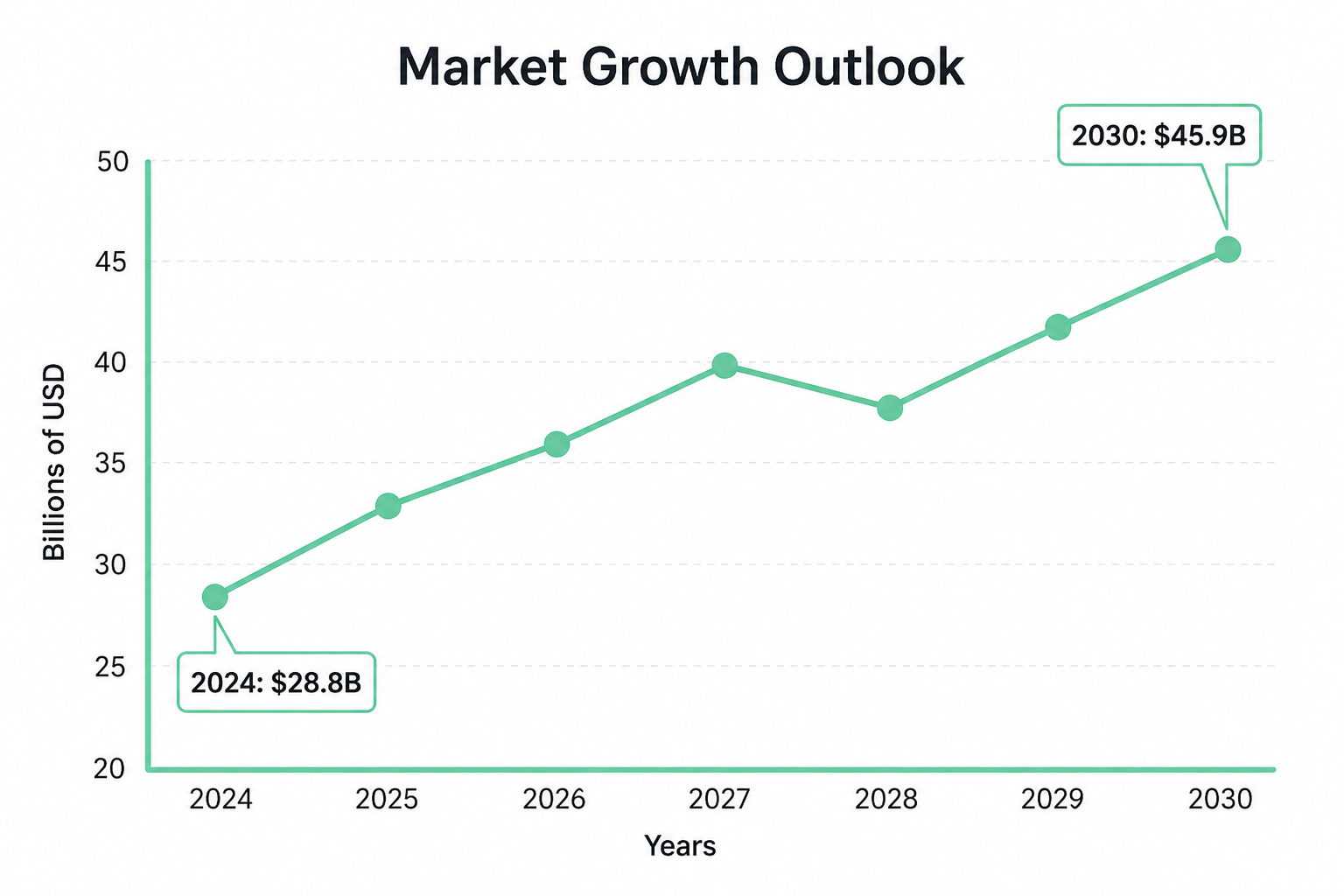
That’s not growth driven by companies buying screens because they look modern. It’s driven by companies getting measurable returns from them. You can learn more about how it works at https://www.lookdigitalsignage.com/.
How Digital Signage Differs from Traditional Signage
Printed signage has one fundamental limitation: it doesn’t change. Updating it means reprinting it, which costs money and time.
Digital signage removes that constraint almost entirely. For example, a restaurant can update a menu in minutes. The operational implications of that flexibility are significant, especially in environments where conditions change frequently.
What’s increasingly called “smart signage” goes further still. Beyond simple scheduled playback, these systems can adjust content based on:
- time of day
- weather
- location within a building
- audience behavior near the screen
- direct user interaction through touch or scan
Digital displays, including digital menu boards, attract around 400% more views than static signage and can deliver an 83% brand recall rate.
What Makes a Digital Signage Strategy Effective?
Up to 80% of digital signage installations miss their performance targets. Everything works as intended. And still, results don’t materialize.
What happened?
In most cases, the failure is strategic, not technical.
Setting Goals Before Selecting Displays
The most reliable way to waste a digital signage budget is to buy screens first and figure out what to show later.
The hardware decision should come after the strategic decision. And the strategic decision starts with KPIs.
What does success actually look like? Specific answers to that question drive everything else.
- For a quick service restaurant, it might be average transaction size, upsell rate, or time-of-day sales patterns.
- For a retailer, it might be basket size, traffic conversion, or promotional lift on specific products.
- For a corporate environment, it might be reduced friction in wayfinding, better awareness of internal communications, or measurable engagement with specific announcements.
When KPIs are defined before hardware is purchased, signage becomes a tool that’s evaluated against real outcomes. Without them, it’s a cost with no clear return.
Audience Targeting and Personalization
Showing the same content to everyone in every location at all times is the simplest possible use of digital signage, and usually not the most effective. Most modern systems support differentiated content, which means different messages for different audiences, locations, and times.
Personalized messaging works because it feels relevant. Content that matches the viewer’s context gets more attention than generic messaging.
Adapting Messaging for Location and Context
The content that works in a busy transit hub is different from what works in a hospital waiting area. That’s why you should adapt your content to the surroundings.
Retail entrances need to earn attention quickly with offers and brand messaging, while corporate breakrooms can carry longer-format internal communications.
Here are some common patterns by environment:
- Retail: promotions, product information, guided selling, brand content
- Corporate: internal updates, meeting schedules, employee recognition
- Hospitality: events, menus, check-in assistance, local information
- Transportation: live schedules, routing, safety messaging, service alerts
Context determines what belongs on a screen. Ignoring it is one of the most common reasons signage programs underperform.
Frequency and Ownership of Content Updates
If a screen shows old content, it can hurt trust. A strong plan includes:
- How often should content change
- Who creates it
- Who approves it
- How templates will be used to keep branding consistent
Content doesn’t have to change every day, but it should always feel current and intentional.
Key Benefits and Measurable Outcomes of Digital Signage
Digital signage is widely used because it produces clear business benefits. It’s more than “advertising screens.” It can support many parts of a business at once.
Boosting Brand Awareness and Customer Engagement
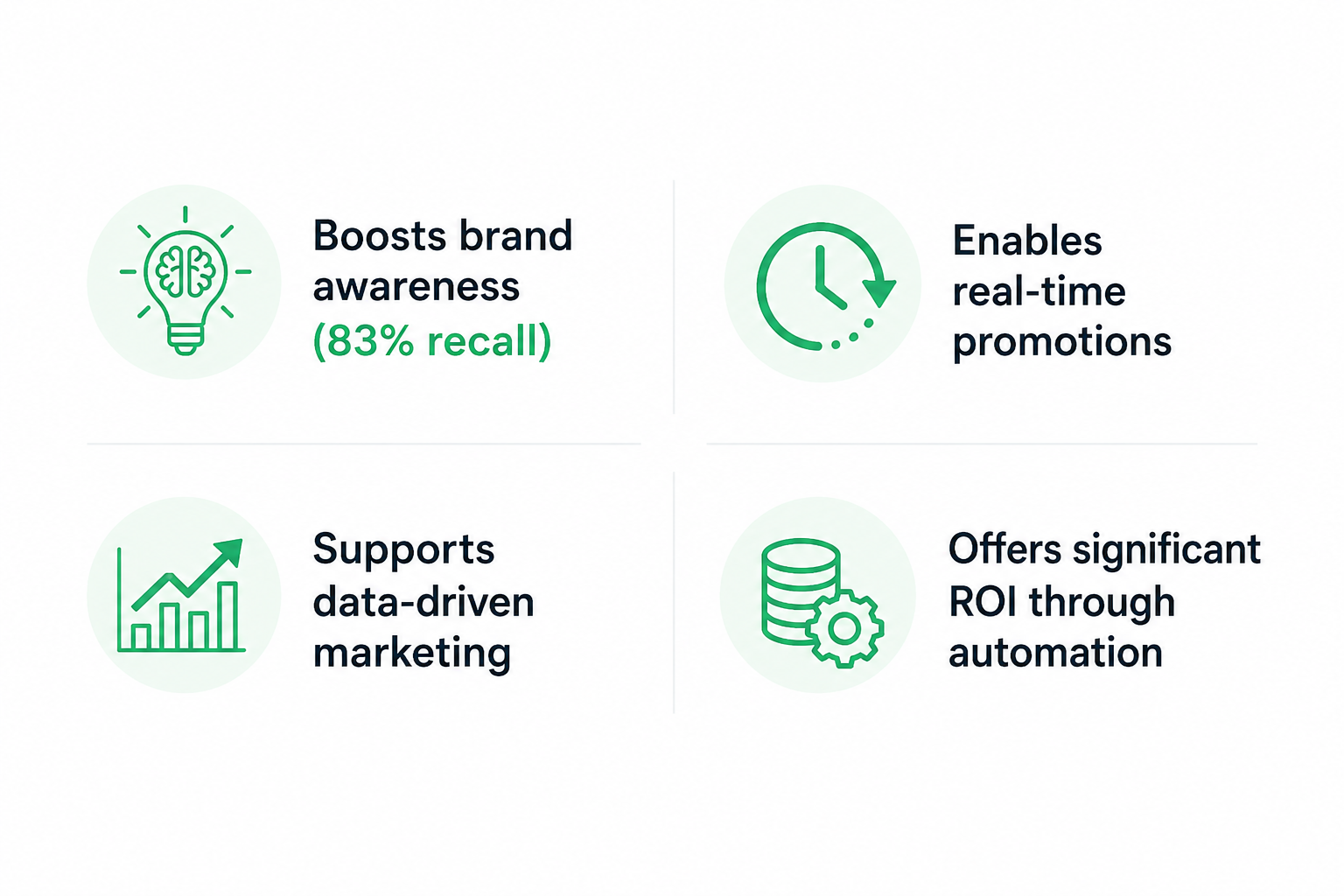
Digital signage is built to grab attention through motion, color, and video. Digital displays can get 400% more views than static signs and can drive 83% brand recall.
Also, 80% of consumers say they entered a store for the first time because a digital sign caught their attention.
Signage can also increase engagement by using interactive tools like:
- Touchscreens
- QR codes
- Product browsing and guided selection
- Coupon downloads or info links
These features help people do something, not just watch an ad.
Enabling Real-Time Communications and Promotions
The ability to change content immediately is commercially valuable in ways that static signage simply can’t match. You can adjust a promotion mid-day when a product is moving faster than expected or pull messaging when inventory runs out.
A 2022 Mood Media study found that digital signage encourages 26% of viewers to buy something and drives unplanned purchases for 19% after seeing digital ads.
Screens that are actively managed in response to real conditions produce stronger results than screens running static loops.
Supporting Data-Driven Marketing Strategies
Connected signage produces feedback. Although this data doesn’t answer every question, it answers more than guesswork does.
When signage connects to POS systems, inventory data, or loyalty programs, content can automatically reflect real business conditions. Thanks to it, the gap between marketing and operations narrows.
ROI: Cost and Time Savings through Automation
Upfront hardware and software costs are real. So is the return. Eliminating printing, shipping, and manual sign replacement across multiple locations adds up quickly.
In quick service restaurants specifically, dynamic menu boards correlate with average sales increases of 31.8% and can raise transaction size by around 30% through upsells and cross-sells. The QSR digital signage market is projected to grow from $3.3 billion in 2024 to $12.7 billion by 2034, with payback periods as short as 18 months.
Digital signage also reduces perceived wait times by up to 35%, which matters for customer satisfaction even when actual wait times don’t change.
Gaining Analytics and Operational Insights
Signage data isn’t just for marketing. It can inform operational decisions, too. As a restaurant owner, you can test which bundle promotions drive upsells at different times of day. Similarly, a grocery store can connect shelf messaging to POS results to measure actual promotional impact.
When screens are treated as measurement instruments, they contribute to decision-making across the business, not just to the marketing team’s metrics.
Actionable Steps for Moving from Screens to Strategy
Installation is where digital signage starts, not where it ends.
1. Aligning Digital Signage Projects With Business Objectives
Every screen should have a defined purpose tied to a measurable outcome. Before you install a screen, ask yourself:
- What specific behavior should it drive?
- What metric will improve if it’s working?
Screens with purposes get managed. Screens without them get neglected.
2. Selecting Partners and Solutions for Long-Term Value
Modern digital signage can be complex, especially across many locations. Many organizations get better results by working with partners who handle the full project lifecycle, including:
- Site surveys and planning
- Project management
- Installation and rollout
- Ongoing support and maintenance
Using one central field services partner can also reduce vendor confusion and help keep quality consistent across locations.
3. Measuring Impact to Drive Continuous Improvement
The businesses that get the most from digital signage over time are the ones that treat it as an ongoing program rather than a completed project. It includes reviewing content, testing hardware, updating software, and collecting feedback from staff and customers.
Markets and audiences change. What worked last year may need updating. The infrastructure to measure, learn, and adjust is what keeps screens useful and results improving.
Conclusion
Effective digital signage is a strategy problem. The screens themselves are the easy part. What actually matters is everything that happens before and after the hardware is installed.
To get the most out of your screens, you need clear objectives, audience-aware content, consistent management, and a commitment to measuring what actually changes.
Intended outcomes don’t come from simply having screens. They come from treating those screens as active business tools.