Rankings got harder to move. That’s the honest summary.
Not because Google got smarter about any one thing, but because the average quality of competing pages went up. Sites that used to rank on thin content with a few decent links now compete against pages that are faster, better structured, more comprehensive, and sitting on domains that have built topical depth over the years. The bar shifted, and a lot of sites didn’t notice until their traffic graphs told them.
What works in 2026 isn’t different in kind from what worked in 2020. Technical health, relevant content, links, and user experience. The difference is in how precisely each of those needs to be executed and how consistently they have to be maintained.
What Technical SEO Is and Why Rankings Depend on It
The way to think about it: content quality is evaluated last. Before Google can assess whether a page deserves to rank, it has to find the page, successfully fetch it, render it properly, and decide it’s worth including in the index. Every one of those steps has failure modes, and most of them fail quietly.
A server returning responses in two seconds, images loading without width and height attributes, so the page jumps around while it loads, robots.txt from a staging environment is blocking JavaScript files. None of these announce themselves. Rankings just gradually underperform what the content quality should produce, and nobody connects it to the technical layer because nobody audited it.
Technical SEO covers: crawl access and indexation, page experience signals, URL architecture and duplicate content handling, internal linking structure, and structured data. These aren’t independent. A slow TTFB limits how much LCP can improve. Orphan pages receive no internal PageRank and rank more slowly regardless of what’s written on them. Canonical issues dilute the authority that should be concentrated.
Crawl budget
Googlebot doesn’t crawl everything on every site every day. It allocates crawl time based on domain authority and how efficiently the server handles requests. For a site with a few hundred pages, this allocation is more than enough, and crawl budget is genuinely not worth worrying about.
For e-commerce platforms, it’s a real operational concern. 40,000 product pages, filter combinations generating hundreds of thousands of parameter URLs, deep paginated archives with content from five years ago. Google crawls a fraction of that daily. Which fraction determines what stays fresh in the index? New products that take three weeks to appear in search results, updated prices that don’t reflect in Google’s index for a month: these are crawl budget problems, not content problems.
The levers: clean the sitemap so it only contains pages worth crawling, block genuinely useless URL patterns in robots.txt, consolidate or noindex thin archive pages that dilute crawl value, and collapse redirect chains that waste time on hops before reaching the destination.
robots.txt specifically: the most destructive configuration error is Disallow: / applied to a production server from a staging template. Rankings disappear within days. Recovery takes weeks once someone notices. Should be on every deployment checklist. Also, confirm CSS and JavaScript aren’t blocked. Google renders pages before evaluating them. Block those files, and it’s parsing raw HTML without the visual context it needs.
Sitemaps and redirects
Sitemap rule: only include URLs that return 200, carry no noindex, and are the canonical version of the page. A sitemap with 404s, redirected URLs, and noindex pages in it sends contradictory signals, and Google trusts it less as a result. Submit to Search Console, monitor Coverage monthly.
Redirects: chains form after migrations when nobody goes back to update the originals. URL A points to B, B moved to C, and now A has two hops before reaching the destination. Audit after every URL restructure. Collapse to single direct jumps. Check again six months later.
Key Technical SEO Elements That Improve Website Speed and Crawlability
Core Web Vitals
Google measures three user experience metrics from real Chrome data: LCP, CLS, and INP. These have been ranking signals since 2021, and they carry more weight in competitive niches than they did when they launched.
LCP is the time until the largest visible element renders. Good is under 2.5 seconds on mobile. The four causes that show up most often in audits: uncompressed or oversized images, slow server TTFB, render-blocking scripts, and lazy loading applied to the LCP image. That fourth one is worth singling out. Someone installs a performance plugin, it lazy-loads all images by default, and it catches the hero image. Now the browser is deprioritizing the exact element Google measures for LCP. Remove loading=”lazy” from the LCP image. Add a <link rel=”preload”> for it in the document head.
CLS measures how much the page shifts visually while loading. Good is 0.1 or below. Fix is mechanical: add explicit width and height attributes to every image element. Without them, the browser can’t reserve space before the image arrives. It renders content into available space, image loads, and everything shifts. With the dimensions set, the browser reserves the right space, and nothing moves.
INP: replaced FID in March 2024. Measures the gap between a user tapping or clicking and the next visible response from the browser. Above 500ms, the page feels unresponsive. The culprit is almost always JavaScript on the main thread. More specifically, it’s third-party scripts. Analytics added in 2022. A heatmap tool from a vendor that the company stopped using. Retargeting pixels from three different ad platforms. A/B testing software is still running tests nobody is monitoring.
Each went into the tag manager. None got removed. Combined, they add 600-800ms of blocking time and produce a failing INP score that nobody connects to the scripts because no single addition caused it.
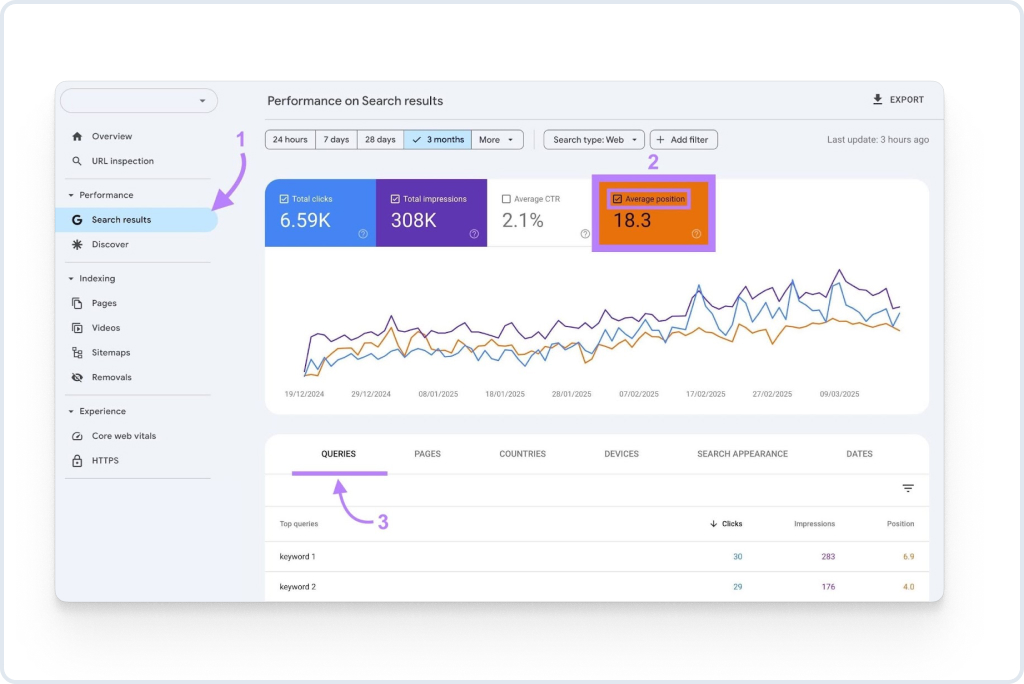
One measurement distinction that matters: Lighthouse shows lab data. Search Console shows field data from real users. They diverge, especially on mobile. A page can score 88 in Lighthouse and fail Core Web Vitals in Search Console simultaneously. The Search Console number is what Google uses for ranking.
TTFB and server response
Everything about page speed has a ceiling set by TTFB. If the server takes 1.8 seconds to respond, the browser hasn’t received a single byte of content at 1.8 seconds. Frontend optimizations improve what happens after that point. They can’t move what happened before it.
Enable full-page caching. On managed WordPress hosting, this is usually handled. On custom setups, database queries on dynamic pages are the first thing to profile. Shared hosting that was adequate at 8,000 monthly sessions becomes the bottleneck at 80,000, and no amount of image optimization compensates for a 2-second TTFB.
Images
Largest share of page weight on most sites. 60 to 80 percent. Convert to WebP. Serve at display dimensions. A 2,400px image in a 600px container sends four times the data the browser uses. Automate compression at upload so new content doesn’t rebuild the problem.
URLs and canonicals
Lowercase, hyphenated, descriptive. Keep them short. Parameter combinations create duplicate content at scale: two URLs serving identical content because the filter parameters are in different orders. Canonical tags resolve this by designating the preferred version. Set self-referencing canonicals on every page. Flatten canonical chains.
Depth: pages more than three clicks from the homepage get crawled less and accumulate less internal PageRank. Orphan pages, the ones in the index with no internal links pointing at them, get crawled infrequently and rank slowly regardless of what they contain.
Explore how to implement technical SEO for faster performance to boost your rankings and improve user experience.
SEO Ranking Factors That Actually Matter in 2026
Search intent alignment
Look at the top ten results for your target keyword before writing anything. Not to copy the format, but to understand what Google has decided satisfies that query. If nine of the ten results are comparison articles with pricing tables and yours is a how-to guide, you’re fighting the intent signal regardless of how good the content is.
Informational queries need depth and specificity. Commercial queries need context around decisions: comparisons, trade-offs, pricing, and evidence of credibility. Transactional queries need the product to be accessible with minimal friction. Getting this wrong costs rankings that content quality can’t recover.
Topical authority
A single strong article targeting a keyword ranks differently on a domain that has covered the broader topic thoroughly versus a domain that published one piece. Google’s evaluation of relevance has moved toward topical coverage, not just keyword matching.
The practical implication: five well-built articles that link to each other and cover a subject from multiple angles outperform ten thin articles targeting adjacent keywords. Depth on a topic compounds. Each piece strengthens the others.
E-E-A-T
Not a toggle in the algorithm. More like a quality lens applied to manual evaluation and to training the systems that do automated evaluation. Author credentials that are visible and verifiable. Factual claims that have sources. Content that reflects someone who has actually done the thing, not just read about it. A site that loads properly and doesn’t look like it was assembled in a day.
For health, finance, and legal topics, these signals matter more than in other categories. Google has been explicit about this in its quality rater guidelines.
Backlinks
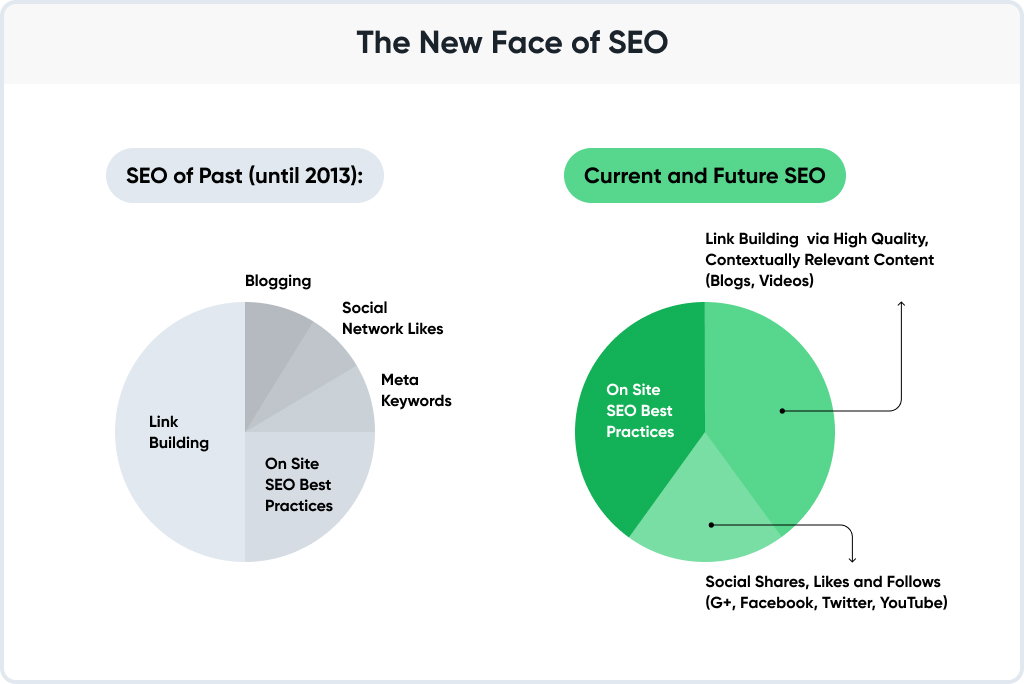
Still matter. What’s changed is the definition of a valuable link. A link from a topically relevant site with a real audience is worth considerably more than a link from an unrelated directory that exists to pass equity. Google got better at identifying the difference, which made link schemes riskier and more likely to produce penalties than gains.
Links worth having in 2026 come from content that earns them, digital PR that puts the site in front of relevant publications, and relationships with other publishers in the niche.
Behavioral signals
Google officially denies that bounce rate is a ranking factor. It also runs the world’s largest browser and has access to user behavior data at a scale no other company can match. Pages that users arrive at and immediately leave perform differently in rankings from pages they stay on and engage with.
This isn’t speculation. Watch what happens to rankings when you fix content quality on a page with high exit rates. The relationship is observable. Keep friction low: fast load, readable on mobile, no interstitials blocking content access.
How to Increase Website Traffic with SEO: Practical Strategy for 2026
Run the audit first
Publishing new content on a site with crawl issues, failing Core Web Vitals, and cannibalization across existing pages produces much weaker results than publishing on a technically clean site. The new content inherits the same structural problems.
Crawl the site with Screaming Frog. Pull Search Console for coverage errors and Core Web Vitals failures. Check that the pages you most want to rank are actually indexed. Fix what’s broken before building more.
Cannibalization before new content
Two or three pages targeting the same keyword, each getting a fragment of the traffic one consolidated page would earn. This is the most common structural problem on sites with more than two years of publishing history and the least often audited.
Filter Performance data in Search Console by page. Find queries where multiple URLs are generating impressions. That overlap is the problem. Merge the content, redirect the weaker pages, and rankings on the surviving URL usually improve within weeks.
Refresh existing pages before creating new ones
A page that ranked in position two in 2022 and has since drifted to position seven already has backlinks, crawl history, and established relevance signals. A new page targeting the same keyword starts with none of those. The math usually favors refreshing.
Sort Search Console impressions and find pages with declining positions over the past 12 months. Deep impressions plus poor CTR usually mean the title and meta description are the problem. Falling position over time usually means the content has fallen behind what competitors are now offering.
Build in clusters, not isolated articles
Pick a subject, map the full scope of it, build the central piece and the supporting articles, and link them together. Each new piece adds to the topical signal across the whole group. The central piece accumulates internal links from the supporting articles. Rankings across the cluster tend to lift together as coverage fills in.
One cluster executed well outperforms twenty isolated articles targeting separate keywords with no internal connection.
Schema on high-value pages
Rich results get more clicks at the same ranking position. Product pages without product schema, FAQ content without FAQ schema, how-to content without HowTo markup: these are leaving clicks on the table. Implementation takes a few hours per page type, and the upside is visible in click-through rates within a few weeks of appearing in results.
Best SEO Strategies for Higher Search Rankings: Technical SEO Checklist
Run this quarterly. Also, run it after any significant development deployment, platform migration, or large content restructure.
Crawl access
- robots.txt verified: nothing blocked that Google needs to access
- Sitemap contains only live, indexable, canonical URLs
- Sitemap submitted to Search Console
- Coverage report reviewed; unexpected exclusions investigated
- Key pages confirmed indexed via URL Inspection
- No accidental noindex on pages meant to rank
Performance
- LCP under 2.5 seconds in Search Console field data, mobile
- CLS at 0.1 or below
- INP under 200ms
- LCP element preloaded; not lazy-loaded
- All images have explicit width and height in HTML
- Images in WebP or AVIF
- TTFB under 600ms
- Render-blocking scripts deferred
- Third-party scripts audited; unused removed
- CDN serving static assets
- Page caching active
Architecture
- No redirect chains longer than one hop
- No redirect loops
- HTTP redirects to the HTTPS site
- SSL valid
- Self-referencing canonicals on all pages
- Parameter-generated duplicates handled
- No orphan pages (indexed but zero internal links)
- High-priority pages reachable within three clicks of the homepage
- Broken internal links resolved
On-page
- Unique title under 60 characters on every page
- Unique meta description under 160 characters on every page
- One H1 per page, primary keyword included
- Heading hierarchy logical
- Content images have descriptive alt text
- Internal links use descriptive, varied anchor text
- Schema implemented on relevant pages and validated
Content
- Keyword cannibalization mapped and addressed
- Declining pages identified, and a refresh plan in place
- New content receives internal links on the publish date
- Topical cluster structure mapped for core subjects