Getting traffic to your website is not the hard part anymore. What really matters is what people do once they land there. Do they stay? Do they click? Do they buy? That is where conversion rate optimization, or CRO, becomes not just helpful but necessary.
Recent data from Statista shows that in 2025, the global average ecommerce conversion rate is around 3.34 percent. It is a small step up from previous years, but considering how expensive traffic has become, even a slight improvement is meaningful.
Getting people to your site is only half the work. If the experience does not guide them clearly, they leave. That is why the importance of CRO continues to grow. Even small design tweaks or faster loading times can shift the numbers in your favor. In a competitive market, knowing why CRO matters for businesses gives you a real edge without increasing your ad spend.
What Conversion Rate Optimization Really Means
Not every website visitor becomes a customer. That is why CRO exists. It helps you understand what stands in the way and how to fix it. Some people sign up for a newsletter. Others add a product to their cart but never check out. CRO focuses on these moments and aims to improve them.
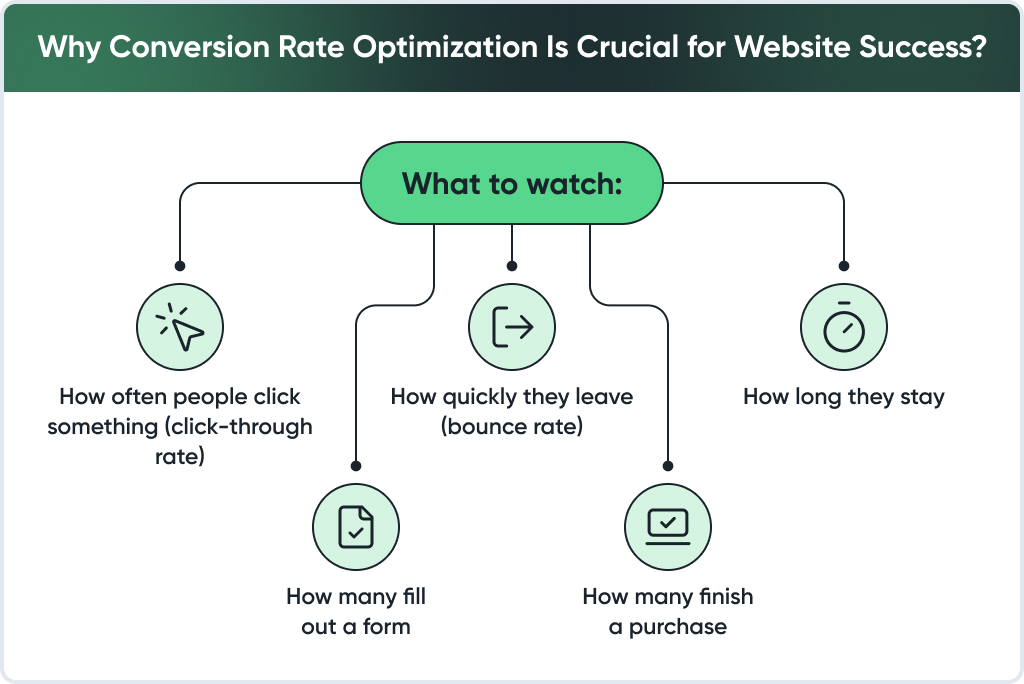
These signals show what works and where people lose interest. They give you real feedback and help focus your next steps.
Where CRO fits in:
CRO works with everything else you do online. Ads, search, and email campaigns bring people in. CRO helps you make sure they stay and take action.
How CRO Enhances User Experience and Engagement
Most businesses treat conversion optimization and user experience as separate things. That’s a mistake that costs money.
The Connection Between User Experience and CRO
Websites that convert well are simply easier to use. When visitors can’t quickly solve their problem or find what they need, they leave. Good CRO removes friction from the user journey rather than just tweaking button colors.
Speed and Navigation Impact Conversions
A one-second delay in page load time reduces conversions by 7%. Slow pages make users question your site’s legitimacy. Poor navigation has the same effect if users can’t find what they’re looking for, they’ll go elsewhere.
Test your site speed with Google PageSpeed Insights and check analytics for drop-off points. Most importantly, try using your own website on mobile.
Visual Hierarchy Guides Users
When everything looks equally important, nothing stands out and users get overwhelmed. Good visual hierarchy uses size, color, and spacing to guide the eye naturally through your content. Make your most important elements the most visually prominent.
Behavioral Analytics Reveals Problems
Tools like heatmaps and session recordings show exactly where users get stuck. Look for patterns if multiple users have the same problem, something needs to change. Sometimes the solution becomes obvious once you see the data.
Focus on the Biggest Problems First
Map out your ideal user journey, then use analytics to find where people drop off. There’s no point optimizing details if major issues are driving visitors away. User experience and conversion optimization work together – improve website conversion by making the experience smoother.
Common CRO Techniques That Drive Website Success
Getting more conversions doesn’t require magic, just the right techniques applied consistently.
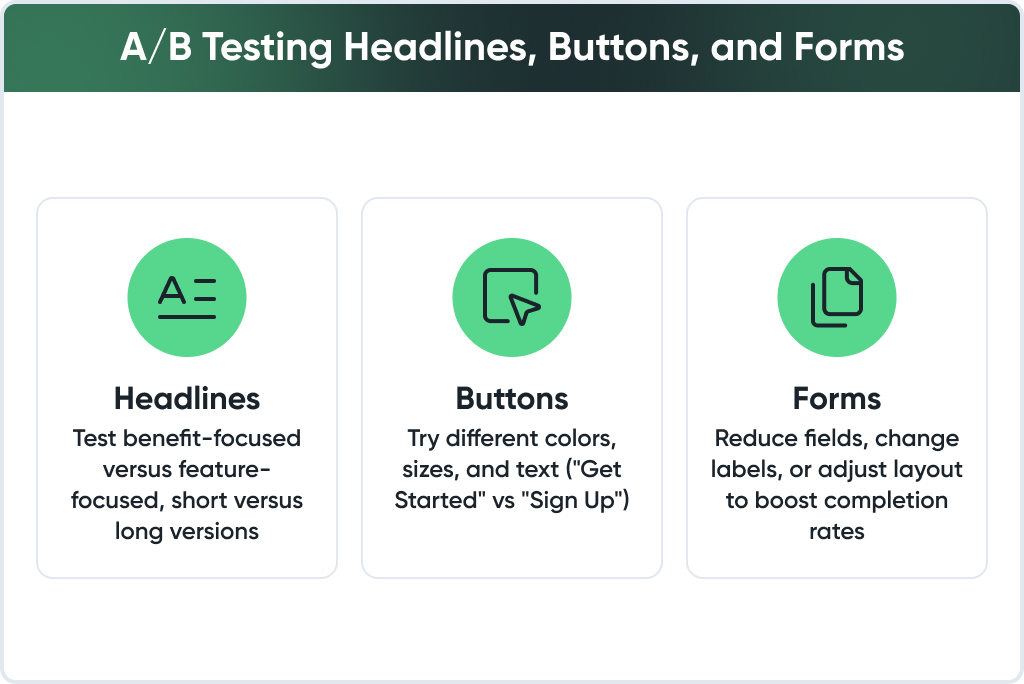
A/B Testing Headlines, Buttons, and Forms
A/B testing means comparing two versions to see which performs better. Start with these high-impact elements:
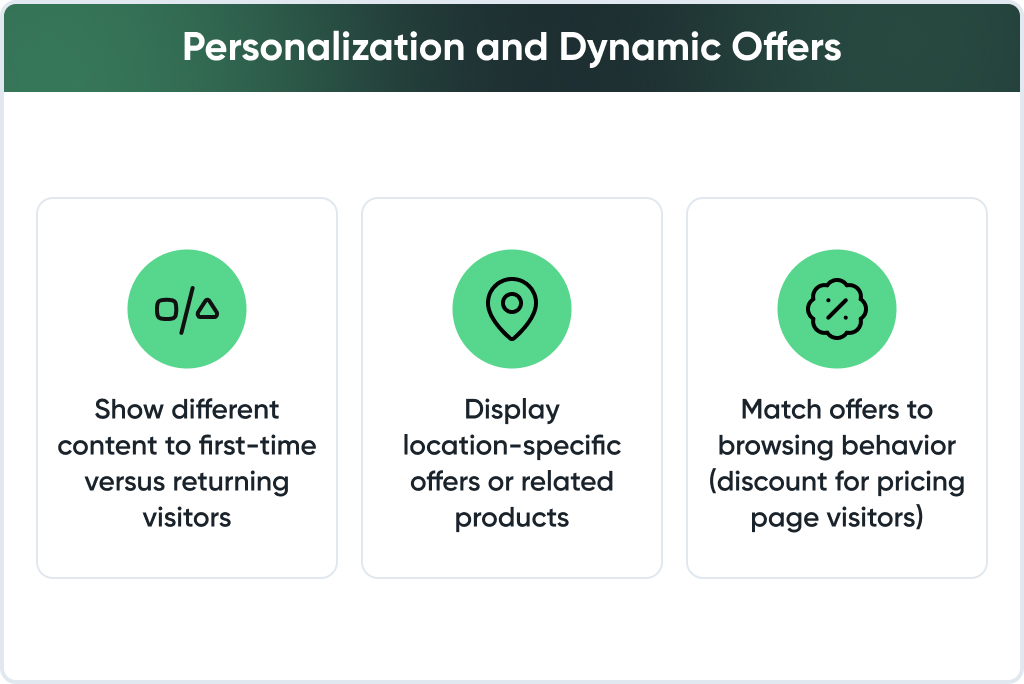
Personalization and Dynamic Offers
Generic websites convert poorly because they try to speak to everyone. Personalization shows relevant content based on visitor behavior:
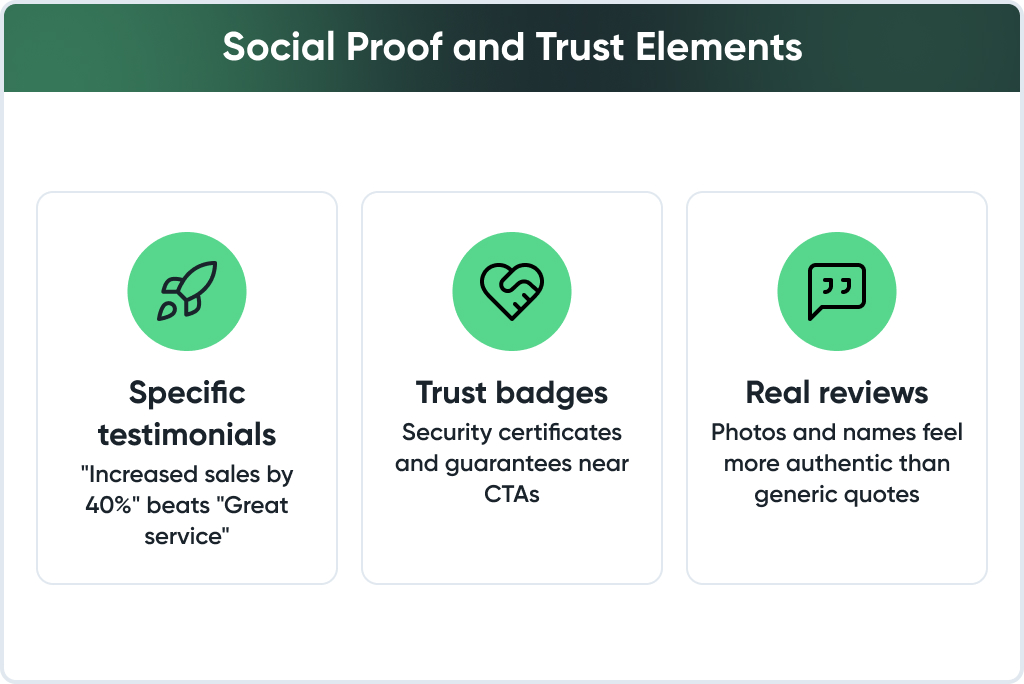
Social Proof and Trust Elements
People look to others when making decisions. Use this natural tendency:
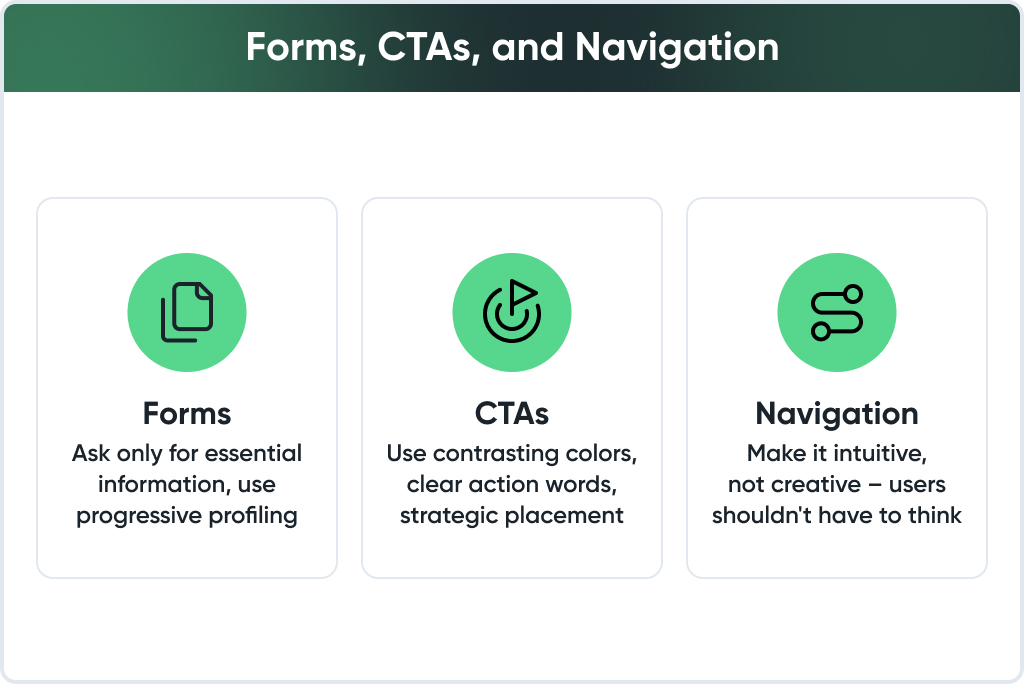
Improving Forms, CTAs, and Navigation
Remove friction from the conversion process:
How to Track and Measure CRO Success
Measuring conversion optimization is about understanding what actually moves the needle for your business.
What Metrics Actually Matter
Most people track too many metrics and miss the important ones. Start with these core measurements:
- Revenue-focused metrics tell the real story. Track revenue per visitor, not just conversion rates. A 2% conversion rate that generates $100 per visitor beats a 5% rate that only brings in $20.
- Customer acquisition cost shows if your improvements are sustainable. If you’re spending $50 to acquire customers worth $30, you have a problem that conversion optimization alone won’t fix.
- Lifetime value matters more than single purchases. Sometimes a lower initial conversion rate brings higher-quality customers who stick around longer.
For tools, Google Analytics covers most needs. Add Hotjar for user behavior insights. Don’t overcomplicate it with dozens of tracking platforms.
Setting Realistic Baselines
Before changing anything, document your current performance for at least a month. Weekends might convert differently than weekdays. Seasonal businesses need longer baseline periods.
Write down exactly what you’re measuring and how. “Increased conversions” means nothing if you can’t explain what counted as a conversion last month versus this month.
Set improvement targets based on your industry. E-commerce sites might see 10-30% improvements, while B2B lead generation often sees smaller percentage gains that translate to significant revenue increases.
Making Tracking Work Long-term
The biggest mistake is testing randomly without learning from results. When something works, figure out why. When it doesn’t, understand what went wrong.
- Keep detailed records of what you tested, when you tested it, and what happened. A simple spreadsheet works better than fancy software if you actually use it consistently.
- Test for at least two weeks before making decisions. One good day doesn’t mean your test is working. Look for sustained improvement over time.
- Remember that tracking conversion optimization results is about building a system that consistently improves your business, not just hitting arbitrary percentage targets.
Start Now
Pick one change and test it this week:
- Rewrite your headline for specific benefits
- Change CTA from “Submit” to “Get My Free Quote”
- Add customer testimonials
Track for two weeks. If it works, you’ve increased revenue without extra ad spend. If not, you’ve learned about your audience.
Don’t wait for perfect timing. Start with one improvement today.
Need help implementing these changes? GoMage specializes in conversion optimization that delivers real results. We’ll help you identify the biggest opportunities, run proper tests, and scale what works. Your website has untapped potential – let’s unlock it together.
FAQ
Conversion rate optimization might sound complicated, but at its core, it is common sense applied to websites. You have visitors coming to your site, right? Some of them buy, some do not. CRO is about finding out why those who do not buy leave and then fixing those issues.
People want instant results, but this process takes time. Usually, you can expect some changes within two to three weeks, but the full benefits of conversion rate optimization take longer, often six to eight weeks of steady work. How fast you see results depends on your traffic volume. Sites with low traffic need more time to gather reliable data.
You probably already have an idea. Visitors come but do not buy. Your shopping cart abandonment rate is very high. You spend money on ads, but the phone does not ring. Maybe visitors start filling out a form but never finish.
Small businesses often see even better results than larger ones. They can implement changes quickly without layers of approval. Also, every new customer counts more when you are small. I have seen local businesses increase revenue by 30 to 40 percent just by fixing obvious website issues.
SEO brings people to your site. CRO helps those visitors take action once they arrive. Both are important. However, there is no point in spending a lot on traffic if your site does not convert. Focus on fixing conversion problems first, then work on increasing visitors.
Start with no budget at all. Most changes that make the biggest impact require only your time. Rewrite headlines, rearrange buttons, clean up forms. See how that goes. Once you prove it works, then you can consider investing in tools or professional help.
Google Analytics is free and covers most of your needs. You can also add tools like Hotjar to see how users interact with your site. But do not get stuck on tools. Some people spend more time setting up tracking than improving their sites. Keep it simple: make changes, measure results, repeat.
That is like trying to fill a bucket with holes by pouring water faster. If your site converts only one percent of visitors, getting ten times more traffic means ten times more people who do not buy. Fix the leak first, then focus on getting more visitors.