Search marketing today looks calm only on the surface. Behind stable traffic charts and familiar keywords there is constant movement. Competitors test new pages, search intent shifts, algorithms change priorities. Businesses that rely only on intuition or outdated reports usually notice problems too late.
This is where SEMrush enters the picture.
Not as a universal answer to every marketing question, but as a structured way to understand how search really works for your business, your market, and your competitors. To explain what SEMrush is properly, it helps to step away from feature lists and look at how teams actually use it in day-to-day decisions.
What Is SEMrush in Practice
At its core, SEMrush is a digital marketing platform focused on search data. It combines keyword research, competitor analysis, technical SEO diagnostics, and content insights into a single workspace.
For many teams, SEMrush becomes the place where questions finally get concrete answers. Why did organic traffic stall even though content output increased? Why does a competitor with fewer pages outrank you? Why does paid traffic convert differently from organic traffic?
When people ask what SEMrush is, the most honest answer is simple. It shows what is happening in search before results appear in revenue reports.
Why Businesses Turn to SEMrush as They Grow
Early SEO efforts often rely on basic tools and assumptions. As a business grows, those assumptions stop working. More pages mean more technical risk. More competitors mean higher keyword pressure. More channels mean harder attribution.
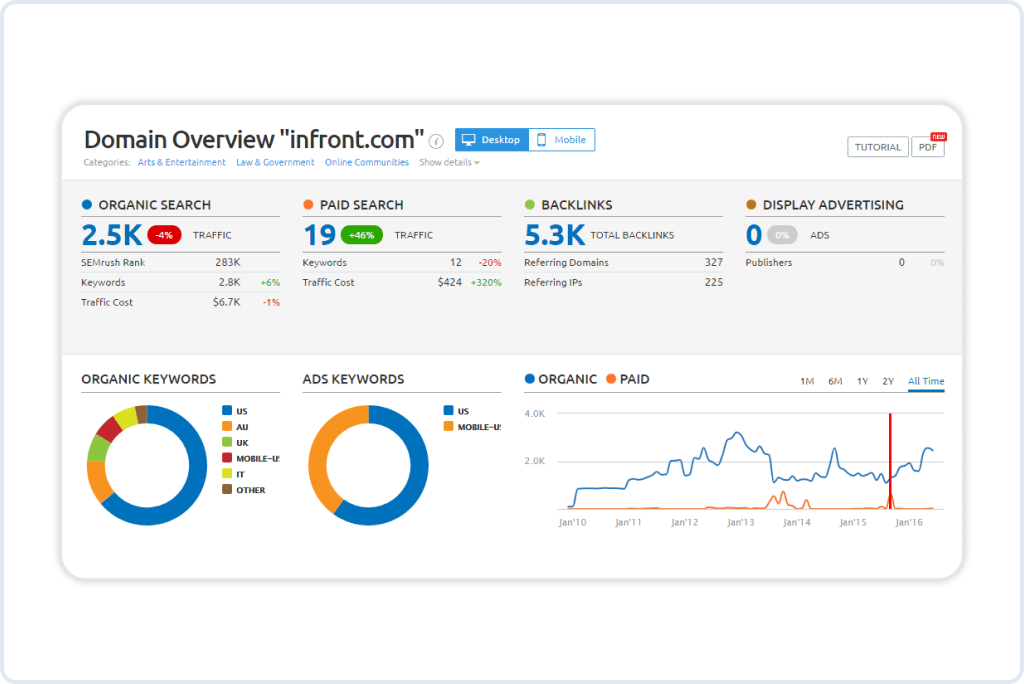
SEMrush helps businesses navigate this complexity by showing patterns instead of isolated metrics. You do not just see rankings. You see how visibility changes over time, which pages drive growth, and where competitors gain momentum.
This shift from isolated checks to continuous analysis explains why SEMrush SEO workflows scale well with growing teams.
Keyword Research That Reflects Real Search Intent
Keyword research is often misunderstood as a numbers game. High volume keywords look attractive, but they rarely tell the full story. SEMrush approaches keyword research from a broader angle.
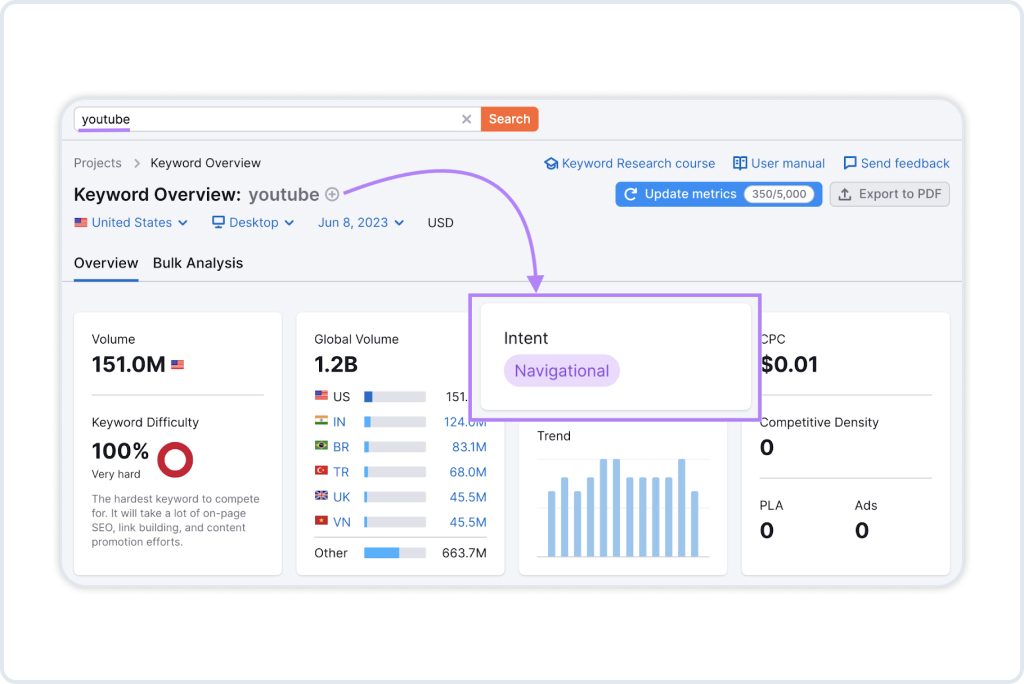
Instead of asking only how often something is searched, SEMrush helps teams understand why users search and what they expect to find. This difference matters when content needs to convert, not just attract clicks.
SEMrush keyword data supports decisions such as:
- Which keywords fit informational content versus commercial pages
- Which long tail queries indicate readiness to buy
- Where ranking difficulty aligns with current domain authority
This approach makes keyword research less mechanical and more strategic.
Competitor Analysis That Changes Positioning
One of the strongest reasons businesses adopt SEMrush is competitor transparency. Instead of guessing how others succeed, teams can see it.
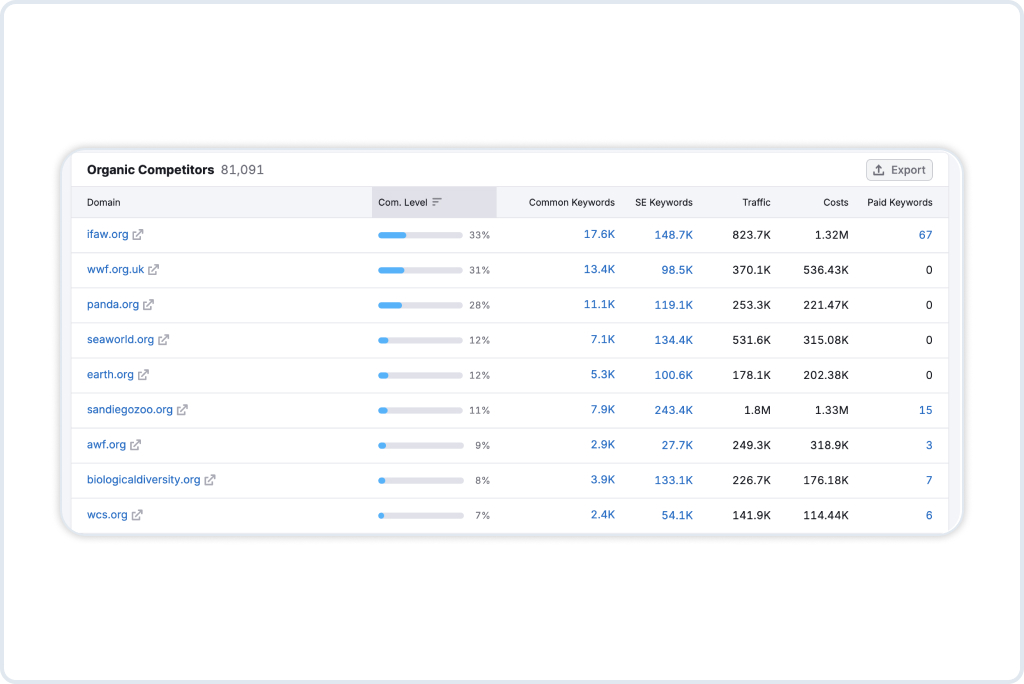
SEMrush reveals which keywords competitors rely on consistently, which pages bring them the most traffic, and how their visibility changes after campaigns or site updates. Over time, this data exposes patterns that manual research rarely catches.
For many businesses, competitor analysis is not about imitation. It is about identifying gaps. SEMrush helps teams spot areas where competitors underinvest or where search intent is underserved.
This insight often shapes positioning decisions far beyond SEO.
Technical SEO Without the Usual Confusion
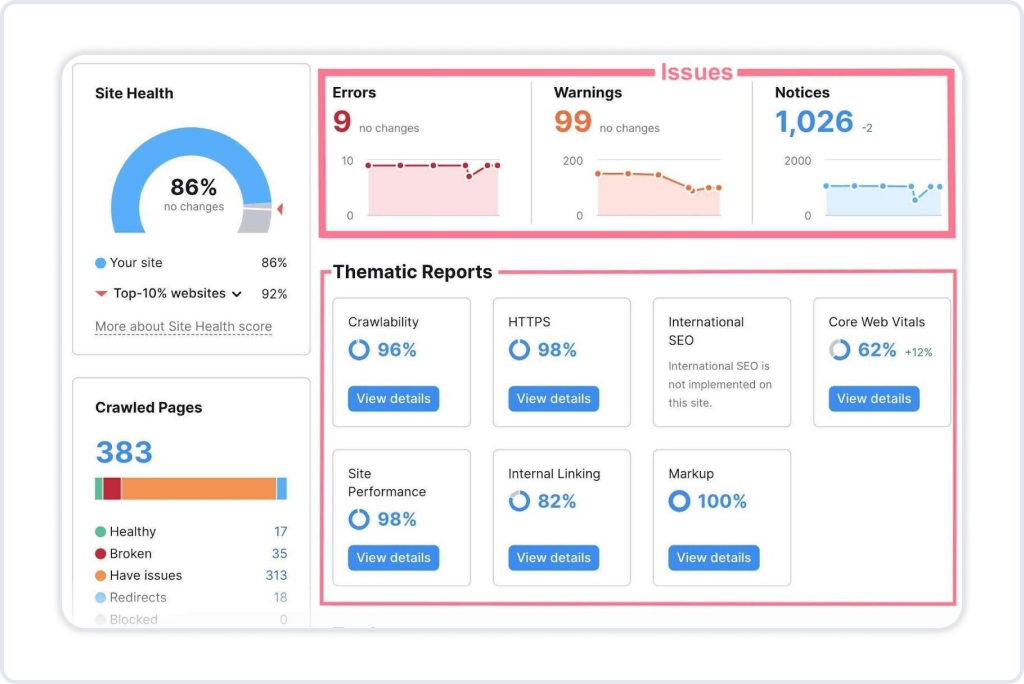
Technical SEO is where many strategies lose momentum. Issues accumulate quietly until performance drops. SEMrush addresses this by turning technical audits into structured, readable reports.
Instead of presenting raw errors, the platform groups issues by severity and potential impact. This allows teams to focus on what actually limits growth rather than chasing minor warnings.
SEMrush site audits typically uncover:
- Indexation and crawlability barriers
- Structural issues affecting large sections of a site
- Performance signals tied to user experience
- SEO errors that scale with content growth
For non technical stakeholders, this clarity is often as valuable as the audit itself.
Content Optimization as an Ongoing Process
Content rarely fails because it is bad. More often, it fails because it does not match search intent closely enough or because stronger competitors already occupy the space.
SEMrush helps teams approach content as an evolving asset. It highlights which pages already perform, which need refinement, and which topics deserve deeper coverage.
Instead of starting from scratch, content teams can:
- Improve existing pages with proven demand
- Align structure and depth with ranking competitors
- Avoid producing content that has little ranking potential
SEMrush SEO Across Different Business Types
Small and Mid Size Companies
For smaller teams, SEMrush provides direction. Limited resources mean every SEO action must matter. SEMrush helps prioritize work that delivers impact without spreading efforts too thin.
Ecommerce Businesses
For ecommerce, complexity grows fast. Thousands of URLs, overlapping categories, seasonal demand. SEMrush helps monitor visibility at scale while keeping technical SEO under control.
Agencies and In House Marketing Teams
For agencies and internal teams, SEMrush simplifies communication. Reports become easier to explain, progress easier to track, and recommendations easier to justify.
SEMrush vs SEO PowerSuite
A frequent comparison in SEO circles is SEMrush versus SEO PowerSuite.
The distinction is less about which tool is better and more about how teams work. SEMrush focuses on cloud based collaboration, competitive intelligence, and market level insights. SEO PowerSuite offers deeper local control and desktop based analysis.
In practice, teams choose based on workflow preferences rather than raw functionality.
Why SEMrush Supports Long Term Business Growth
Search visibility compounds slowly. Improvements made today often show results months later. SEMrush supports this long horizon by tracking trends, not just snapshots.
Businesses use SEMrush to:
- Identify early warning signs before traffic declines
- Measure progress beyond single keyword rankings
- Align SEO work with commercial objectives
Where SEMrush Fits and Where It Does Not
SEMrush provides insight, structure, and context. It does not execute changes or replace strategic thinking. The quality of results depends on how teams interpret and apply the data.
Used thoughtfully, SEMrush becomes part of daily decision making rather than a tool opened only for monthly reports.
Final Thoughts
If you came here searching for what is semrush, you probably care about one thing. You want growth from search that you can plan around, not traffic that appears and disappears.
SEMrush is a strong platform for that because it turns SEO into a set of decisions backed by market data. Still, tools do not replace execution. A tool can show what to fix. It cannot fix it for you. That is where a reliable SEO partner makes a difference.
If you want to move from insights to measurable outcomes, GoMage SEO services can help you turn SEO data into a clear roadmap and real improvements. GoMage teams work with ecommerce brands and growing businesses on technical audits, keyword strategy, content optimization, and ongoing performance tracking using SEMrush as a practical foundation.
FAQ
SEMrush is used for keyword research, competitor analysis, technical site audits, and rank tracking. It helps you decide what to tackle first by showing which issues and opportunities are most likely to improve visibility.
Marketers use SEMrush to understand demand, find keyword opportunities, keep an eye on competitors, and build SEO plans that support real business goals such as leads and sales.
Yes. SEMrush is strong for ecommerce because it supports large site audits, keyword research for category and product pages, competitor benchmarking, and tracking performance across many URLs.
SEMrush provides solid directional data for planning and prioritization. It works best when you compare trends, validate with Search Console and analytics, and focus on intent and competition rather than treating any single number as absolute.
Yes. SEMrush can show which domains compete with you in search results, even if they are not direct business competitors. This is useful because SEO competitors are often content publishers, marketplaces, or review sites.
It checks technical and on-page issues that can limit search performance, including crawlability, indexation signals, broken links, redirect chains, duplicate content, and other factors that affect site quality and structure.
SEMrush is cloud-based and strong in competitor intelligence and market research. SEO PowerSuite is often used for desktop-based workflows and more granular control in certain tasks. The better choice depends on how your team works and what insights you need most.
It can be, especially if you need a clear plan and cannot afford to waste time on the wrong keywords or low-impact fixes. Many small teams use SEMrush to focus on quick wins and build a steady content and technical roadmap.
Yes. SEMrush can support local SEO by tracking rankings in specific locations, helping you research location-based keywords, and auditing pages that target local intent. For Google Business Profile management, you typically pair it with other tools.
Not always, but many teams bring in experts when they want faster progress or need support with execution. SEMrush shows the opportunities and problems, while an experienced SEO team can turn that into a roadmap, implementation, and measurable growth.