Meta Verified subscription is Meta’s answer to a growing problem on social platforms: identity confusion. As Facebook and Instagram continue to scale, so does impersonation, account fraud, and the frustration of dealing with automated support. Meta Verified attempts to solve this by turning verification into a paid service.
The idea is simple. Pay a monthly fee, confirm your identity, and receive a badge that proves your account belongs to a real person or organization. What is less simple is whether that badge is actually worth the cost.
What Meta Verified Actually Includes
Meta Verified is built around identity confirmation. Subscribers go through an ID-based verification process and receive a visible badge on their profile. This badge signals authenticity, not popularity.
Beyond appearance, Meta Verified adds operational benefits. Verified accounts receive proactive monitoring for impersonation attempts. When fake profiles appear, removal tends to happen faster. Subscribers also gain access to a dedicated support channel, which can significantly reduce response times when accounts are restricted or compromised.
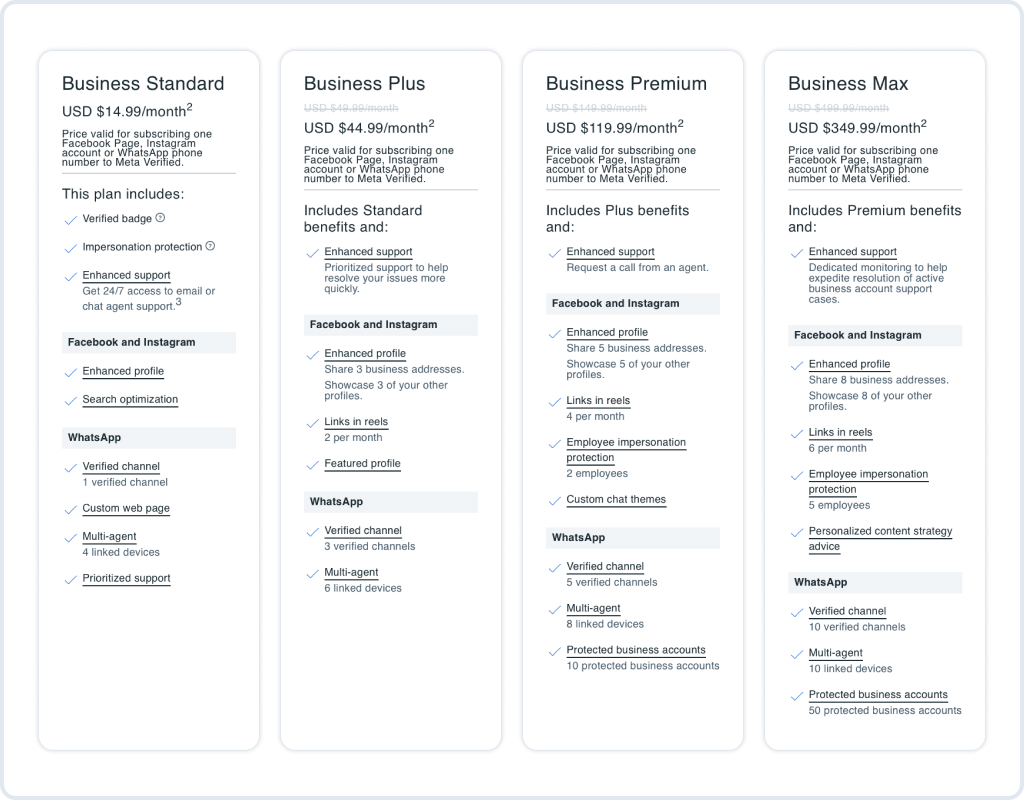
Some plans also include additional creator tools. These may include exclusive stickers, content attribution features, and labels that help original posts retain credit when shared. For businesses on higher tiers, Meta has introduced options for verifying multiple accounts under one brand and receiving expanded customer support.
Pricing depends on how you subscribe. Web-based plans are usually cheaper than mobile subscriptions due to app store fees. Costs increase further for business-focused tiers, which can reach well into the hundreds per month depending on scope.
Why Verification Has Become a Paid Product
Verification used to be limited to public figures and well-known brands. That model struggled to keep up with the scale of modern social media. With billions of users and constant impersonation attempts, Meta shifted toward identity-based verification rather than notability-based approval.
This means the badge now confirms who you are, not how famous you are. That distinction matters. It changes how the badge should be interpreted and why someone might choose to pay for it.
The Real Benefits of Meta Verified
Stronger protection against impersonation
Fake profiles remain one of the most common scams on social media. When an account copies a name, photo, or bio, the damage can be immediate. Verified accounts have an easier time proving ownership and requesting takedowns.
Faster access to account support
Many users subscribe after experiencing how difficult it can be to reach support through standard channels. Meta Verified offers a clearer path to human assistance, which can be critical during account lockouts or security incidents.
Clearer trust signals
A verified badge can reduce friction in first interactions. Messages feel more credible. Collaboration requests carry less suspicion. For consultants, creators, and founders who rely on personal profiles, this can support business conversations.
Potential visibility advantages
Meta has suggested that verified accounts may receive slight prioritization in search or comment sections. Results vary widely. Some users notice changes, others do not. This should be treated as a possible benefit, not a guaranteed outcome.
Where Meta Verified Falls Short
Ongoing cost
Verification is no longer a one-time achievement. It is a recurring expense. Subscribing for both Facebook and Instagram on mobile can quickly approach thirty dollars per month, and business plans cost even more.
Verification no longer implies authority
As access expands, the badge loses its old meaning. It no longer signals expertise or influence. It simply confirms identity. For some users, that reduces the perceived value.
Strict identity requirements
Meta requires government-issued identification that matches the account name. Changing names can lead to loss of verification. This rigidity creates challenges for people who do not use their legal name publicly.
No guaranteed growth
Verification does not replace strategy. It does not fix weak content or poor engagement. Users expecting reach or revenue growth purely from the badge are often disappointed.
How to Subscribe to Meta Verified
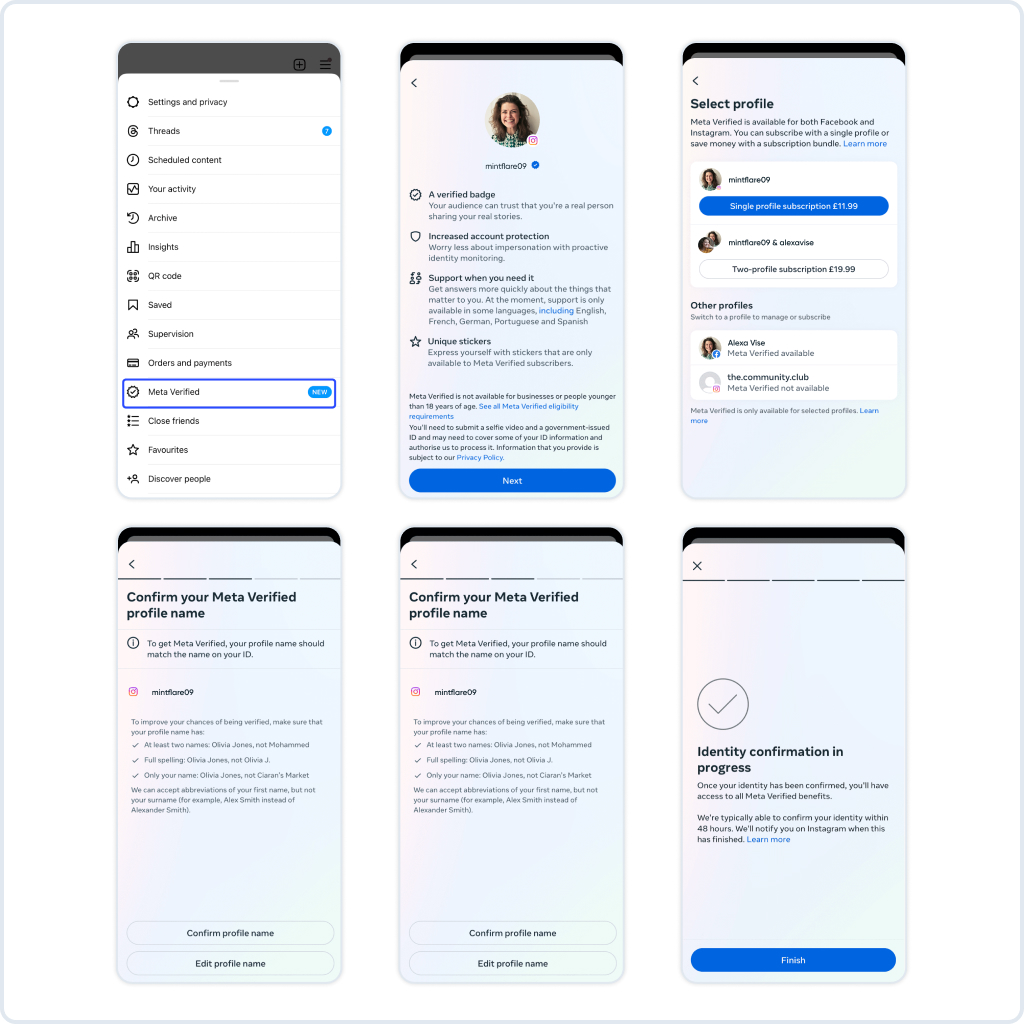
Signing up takes a few minutes, but it helps to prepare one thing first: have a clear photo or scan of your government issued ID ready to upload.
- Open Instagram and go to your profile: Tap your profile icon in the bottom right.
- Open the menu: Tap the three lines in the top right corner.
- Find Meta Verified: Select Meta Verified, then tap Next.
- Choose what you want to verify: Pick the Meta accounts you want covered. Depending on what is available for your profile, this can include multiple accounts and Facebook pages.
- Confirm subscription and payment: Review the plan and pay. The subscription renews monthly until you cancel.
- Check your profile details: Make sure your profile photo and name match your identity document.
- Upload your ID: Submit a photo of your passport, driver’s license, or national ID card. Once it is approved, you will see the verified badge on your account.
Is Meta Verified Worth It for Businesses?
For most small businesses, the return is unclear. If Instagram or Facebook are not core revenue channels, the subscription may not justify itself.
Founder-led brands are an exception. When customers interact directly with an owner’s profile, verification can support trust and reduce impersonation risks. Larger organizations may also feel pressure to verify Meta experiments with warnings on non-verified business interactions.
Still, verification should not replace fundamentals like customer reviews, content quality, or paid acquisition strategies.
Who Gets the Most Value from Meta Verified
Meta Verified tends to work best for people whose identity is closely tied to their income.
This includes creators, influencers, consultants, speakers, and professionals who receive frequent direct messages or deal with brand impersonation. It also makes sense for users who have already experienced account theft or prolonged support issues.
For casual users or private profiles, the benefits are usually limited.
How Meta Verified Compares to Other Platforms
Paid verification is not unique to Meta. Platforms like X have taken similar approaches. The difference lies in how Meta combines identity checks with monitoring and support access. Other networks such as LinkedIn and TikTok, still rely largely on internal review processes rather than subscriptions.
Meta’s approach is more transactional. You pay for protection and access rather than waiting to be approved.
A Realistic Way to Decide
Try this simple test.
- If losing access for seven days would cost you money, customers, or reputation, Meta Verified may be worth considering.
- If you regularly receive messages from strangers and those conversations lead to business, the trust layer helps.
- If you have never been copied, never had issues, and rarely need support, you may not feel the difference.
What Paid Verification Says About the Future
Meta is not alone. Platforms are turning support and security into paid tiers. It is a business model that makes sense for them and feels uncomfortable for users. The upside is that it creates a clearer path to help. The downside is that basic safety starts to feel like an upgrade.
Over time, subscriptions like this may become normal, especially for people who treat social profiles as business assets.
Conclusion
Meta Verified is best understood as a protective service. The badge is the surface level part. Support access and identity protection are the real product.
If you run a public facing profile and your work depends on being reachable, staying visible, and protecting your name, the subscription can be a reasonable tradeoff. If your account is mostly casual, the value is harder to justify.
The smartest way to evaluate Meta Verified is to look at what it prevents. Not what it promises, but what it helps you avoid.
FAQ
It’s basically Meta’s way of letting you pay to prove you’re real. You get a blue checkmark on Instagram or Facebook, plus some extra security stuff and actual customer support when things go wrong.
Depends where you sign up. It’s cheaper if you do it through the website. If you subscribe through the app, it costs more because Apple and Google take their cut. And yeah, Instagram and Facebook count as separate subscriptions, so if you want both verified, you’re paying twice.
Probably not, honestly. If people keep making fake accounts pretending to be your business, or if your entire business runs on social media trust, then maybe. But if Instagram and Facebook are just where you post updates sometimes? Skip it.
Maybe? Some people swear their comments get seen more or their profile shows up higher. Others notice zero difference. The algorithm still cares way more about whether your content is actually good than whether you have a checkmark.
You need to be over 18 and have a government ID that matches your profile name exactly. If your Instagram name is different from what’s on your driver’s license, you’re not getting verified.
The badge goes away immediately when your subscription ends. You also lose the support access and account monitoring. If you change your mind later and want it back, you have to go through the whole verification process again.
Nope. Meta’s pretty clear about this. The badge just means you proved you’re a real person or business. It doesn’t mean you’re an expert, an authority, or anyone special. Just verified.
It makes it easier to report impersonators and might get Meta to act faster, but it won’t stop people from making fake accounts. Think of it more like a deterrent than actual protection.
Usually, yeah. Creators get more out of the visibility boost and the credibility with their audience. For brands, it’s harder to justify spending money every month unless you’re doing serious business through Instagram or Facebook.
Honestly? Depends entirely on your situation. Some people sleep better knowing they have the badge and support. Others feel like they’re just giving Meta money for nothing. If social media actually drives your business or personal brand, it might be worth it. If not, save your money.