The numbers tell their own story. Analysts at Precedence Research expect the global AI market to reach about 638 billion dollars in 2025, and it may grow to 3.7 trillion by 2034. Those are huge figures, but behind them are simple things: people using AI at work every day. The future of AI development is unfolding in real time. A McKinsey report says 94 percent of employees and nearly all business leaders already use or understand AI tools. That’s an entire global workforce learning a new skill at once.
Developers stand right in the middle of this shift. They are not just writing code anymore. They are training models, experimenting with data, and teaching systems how to reason. Each new framework or update changes how people think about intelligence itself.
The next few years will be shaped by the tools they choose, the ethics they follow, and the creativity they bring into their work. This article looks at the main trends that guide AI development, the technologies behind them, and the ideas that are pushing software far beyond what we used to call “smart.”
AI Development Tools Every Developer Should Watch in 2025
Building AI doesn’t require what it used to. Where you once needed deep expertise and powerful servers, today you can prototype on a decent laptop. The barriers are lower, which means more people are trying things out.
Core frameworks
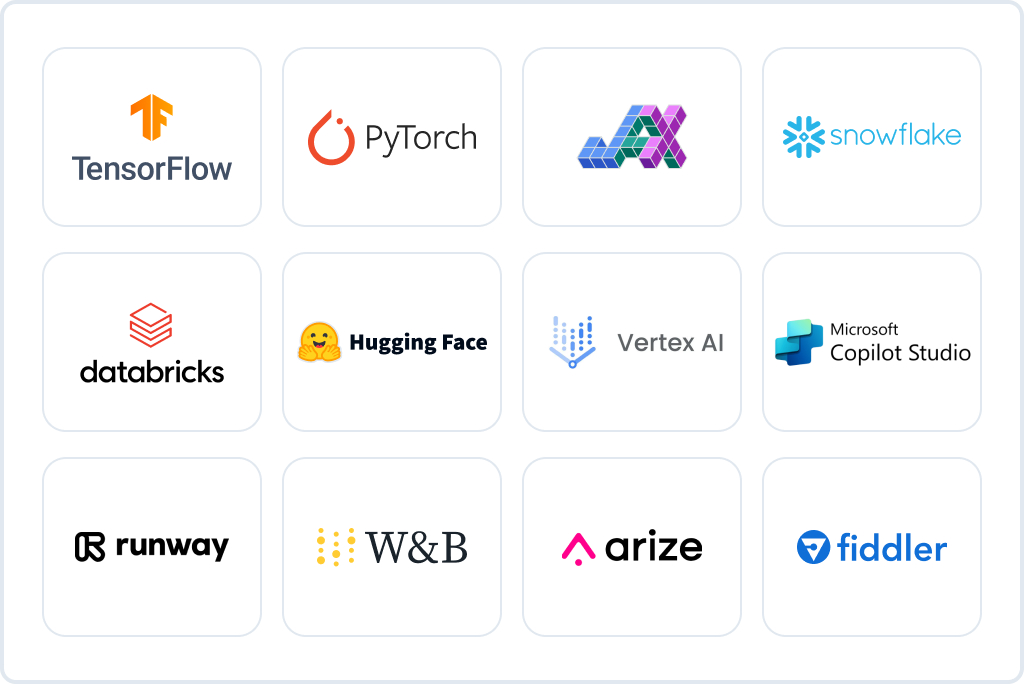
TensorFlow and PyTorch remain popular choices. They’re stable, widely used, and have plenty of community support when you get stuck. For heavier computational tasks, JAX delivers good performance while keeping code maintainable.
Better data workflows
Data work is often messy. Snowflake, Databricks, and Hugging Face help streamline things like dataset organization, experiment tracking, and version control. These platforms reduce chaos and make collaboration smoother.
Lower barriers to entry
You don’t need to code everything anymore. Tools like Vertex AI, Microsoft Copilot Studio, and Runway let non-engineers build prototypes. Product people and designers can test concepts themselves, which sometimes leads to unexpected ideas.
Keeping models in check
After deployment, you need visibility. Weights & Biases, Arize AI, and Fiddler track how models perform in practice, catch drift early, and help debug issues. Monitoring matters when reliability counts.
What’s changing
AI work is moving into mainstream development. Teams without AI specialists are experimenting, learning, and shipping new capabilities. The tools are becoming standard parts of how software gets built, not special cases reserved for research teams.
AI Development Trends Shaping the Future of Technology
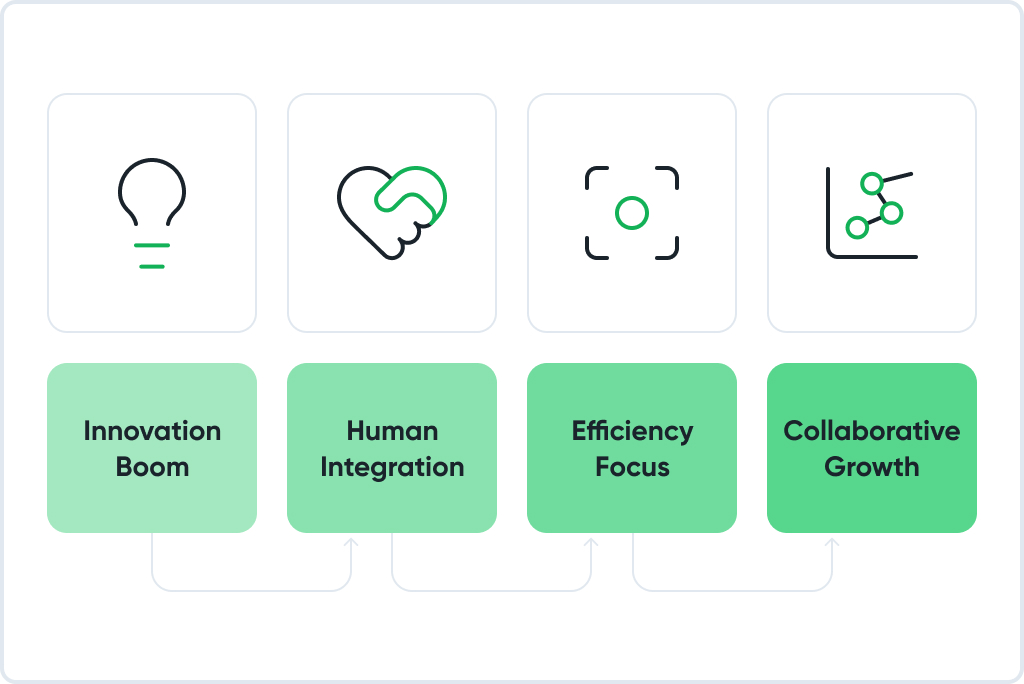
AI keeps showing up in unexpected places. What seemed futuristic a few years ago now runs quietly in the background of apps, workflows, and hardware we use daily. In 2025, the story isn’t just about individual breakthroughs but how everything connects and scales together.
Working alongside machines
The relationship between developers and AI is shifting. Instead of building systems that automate people out of the picture, there’s more focus on tools that understand context and creative goals. Code reviews, design mockups, content drafts… AI handles parts of the process while people steer direction. It feels less like using software and more like collaborating with something responsive. In content pipelines, teams transcribe meetings and voice notes; modern editors let you convert speech to written text.
Processing closer to home
More AI is running directly on devices now. Phones, wearables, smart home gadgets… they process data locally instead of sending everything to remote servers. This makes things faster, keeps information private, and enables real-time applications in healthcare, logistics, and connected environments that wouldn’t work with cloud delays.
Building lighter and smarter
Training huge models takes serious energy. Companies are paying attention to that now. Smaller architectures, reusing existing models, generating synthetic training data… these approaches keep development moving without the environmental cost spiraling. Efficiency is becoming part of the design process, not an afterthought.
Mixing and matching components
AI development feels more like assembly than invention lately. Pre-trained models, APIs, open frameworks… you can combine pieces and launch something functional in days. This levels the playing field. Startups can move as fast as big tech companies because the building blocks are accessible to everyone.
Looking Ahead: Where AI Development Is Headed Next
AI is already everywhere. Your phone gets smarter with every update. Your car suggests better routes. The apps you use daily adapt to how you work. Intelligence is just built in now. So the real question is how we guide it to actually serve people well.
The next phase feels different. Less about scale, more about usefulness. Developers want systems that grasp context instead of just processing data. Models that learn from ten examples, not ten million. AI that tells you why it made a choice in plain language. The focus is shifting toward tools that enhance how we think and create, not just speed up what machines already do.
Sustainability matters now too, and not a moment too soon. Training huge models eats massive amounts of power. That’s finally getting attention. Engineers are working on leaner approaches. Smarter training, smaller datasets, less waste. High performance without the environmental cost.
Collaboration is opening up as well. Labs, startups, and major companies are sharing more. Not everything, but more than before. Models get released. Datasets circulate. Techniques spread. When that happens, innovation accelerates. People build on what others discovered instead of starting from scratch behind closed doors.
Challenges Developers Still Face
The tech does incredible things, but every win comes with its own set of headaches. Some are purely technical puzzles. Others dig into questions about fairness, transparency, what we owe the people using these systems.
Data quality
This trips up nearly everyone. Your model’s only going to be as smart as what you feed it, and let’s be honest: most datasets are an absolute mess. You’ve got incomplete entries, information that hasn’t been updated in years, unconscious biases hiding in the columns. Cleaning all that up? It’s painstaking. Requires constant judgment calls. There’s no automation that’ll do it for you.
Transparency
Plenty of these models function like closed boxes. They’ll spit out an answer, occasionally a brilliant one, but good luck getting them to walk you through their reasoning. Fine if we’re talking about playlist recommendations. Not so fine when the stakes involve someone’s health diagnosis or whether they get approved for a mortgage. People have every right to understand the thinking behind major decisions.
Security and privacy
AI touches sensitive information constantly. Patient histories, transaction records, personal identifiers. A single security gap can spiral into catastrophe. This isn’t about running a setup script and calling it done. You’re dealing with ongoing vigilance, thinking like someone actively trying to exploit weaknesses, patching vulnerabilities before they become disasters.
Ethical balance
There’s relentless pressure to ship quickly, beat your competitors to market, and demonstrate growth. But skipping the uncomfortable conversations about responsibility and fairness creates problems that multiply over time. Strong teams recognize when velocity matters less than getting the fundamentals right.
Conclusion
Everyone building in this space faces similar questions now: How do we make these systems transparent? How do we ensure they’re deployed responsibly? How do we create tools that genuinely help rather than just automate for automation’s sake?
GoMage turns those questions into working solutions. We bring years of hands-on experience developing AI products that balance capability with accountability. Our work emphasizes durability over trends, combining deep technical knowledge with authentic understanding of how organizations function.
FAQ
Getting quality data remains the biggest obstacle. Add to that making systems interpretable, maintaining robust security, navigating ethical considerations.
Real datasets arrive messy and incomplete. Cleaning requires extensive manual effort plus ongoing decisions about relevance, accuracy, potential bias.
Integrate explainability mechanisms throughout development. Implement tools that surface decision factors, weight different inputs appropriately, acknowledge uncertainty where it exists.
Enormous. When training data captures only partial perspectives, the resulting model inherits those limitations. Particularly concerning domains affecting people’s opportunities and wellbeing.
Source data more broadly. Conduct regular testing across diverse user populations. Including interdisciplinary perspectives during evaluation, people outside engineering often spot issues technical teams overlook.
Absolutely. Modern cloud infrastructure and open-source frameworks have dramatically lowered barriers. Success depends more on thoughtful planning than budget size.
Protecting user privacy rigorously. Maintaining transparency about system capabilities and limitations. Augmenting human judgment rather than displacing it entirely. Considering downstream consequences before deployment.
Through anonymization techniques, secure infrastructure, careful model design that extracts patterns without retaining identifying information about specific individuals.
Significantly. Low-code development platforms, accessible APIs, pre-trained models all enable marketing teams, business analysts, creative professionals to leverage AI capabilities directly.
Begin with focused objectives rather than broad transformation goals. Choose specific problems worth solving. Partner with experienced practitioners who understand both technological and organizational dimensions.