Shopify agentic AI is quietly transforming how stores operate, moving beyond standard tools toward autonomous decision-making. You notice it indirectly when a competitor responds to pricing changes within hours, sends perfectly timed emails, or maintains flawless inventory levels while yours hits zero. It looks like a new agency or a bigger team, but the reality is simpler: they changed how their store makes decisions.
That change is agentic AI, and in 2026, it has moved from something experimental to something that is quietly becoming a baseline expectation for stores that want to stay competitive.
What “Agentic” Actually Means
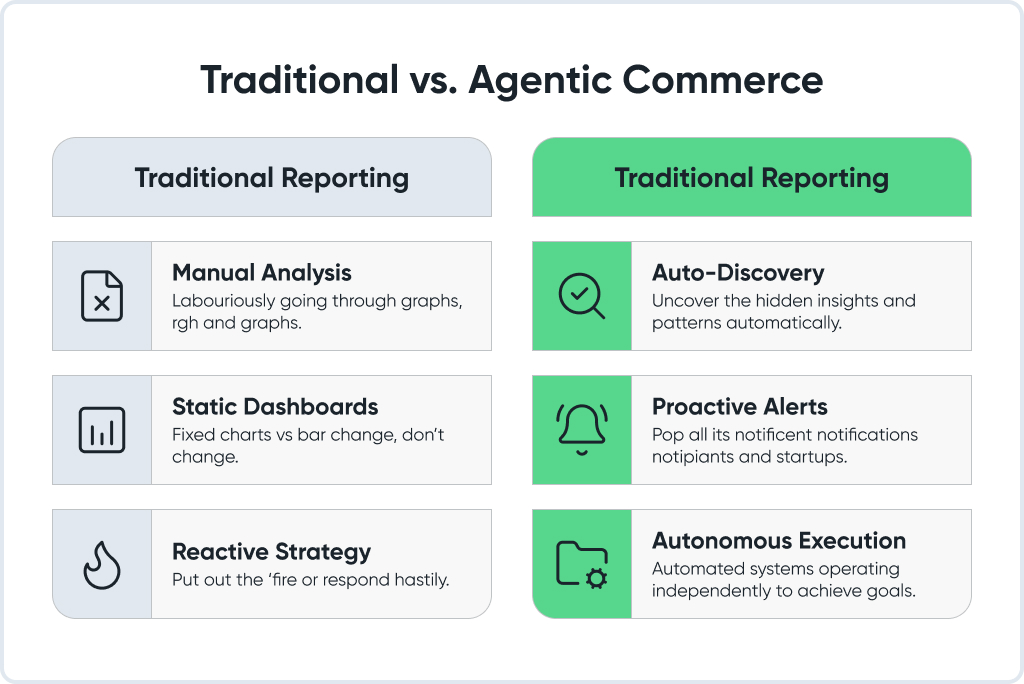
Most merchants have already encountered AI in some form on Shopify: autocomplete suggestions when writing product descriptions, a chatbot that handles order status questions, and recommendation widgets that show related products. These tools are reactive by nature. You provide input, they produce output, and the interaction ends there. Someone still has to take that output somewhere and do something with it.
Agentic AI operates on a different model. Rather than waiting to be asked something, it works toward a goal across multiple steps, using whatever tools and data it has access to, checking its own results, and adjusting when something is not working. The process runs in loops rather than single exchanges, which means it can handle tasks that require more than one decision.
A practical example: a product starts selling faster than usual, and instead of waiting for you to notice the sales spike, an agentic system detects the velocity change, cross-references current stock levels against supplier lead times you have already entered, and either drafts a purchase order for your review or sends you a specific warning about how many days of stock remain. Nothing in that sequence required a human prompt. The system was watching the conditions, recognized a developing problem, and worked through the relevant steps on its own.
The difference between that and a standard automation is meaningful. A standard automation fires when a specific condition is met. An agentic system reasons about what the condition means and what should happen next.
How Shopify Is Actually Building This
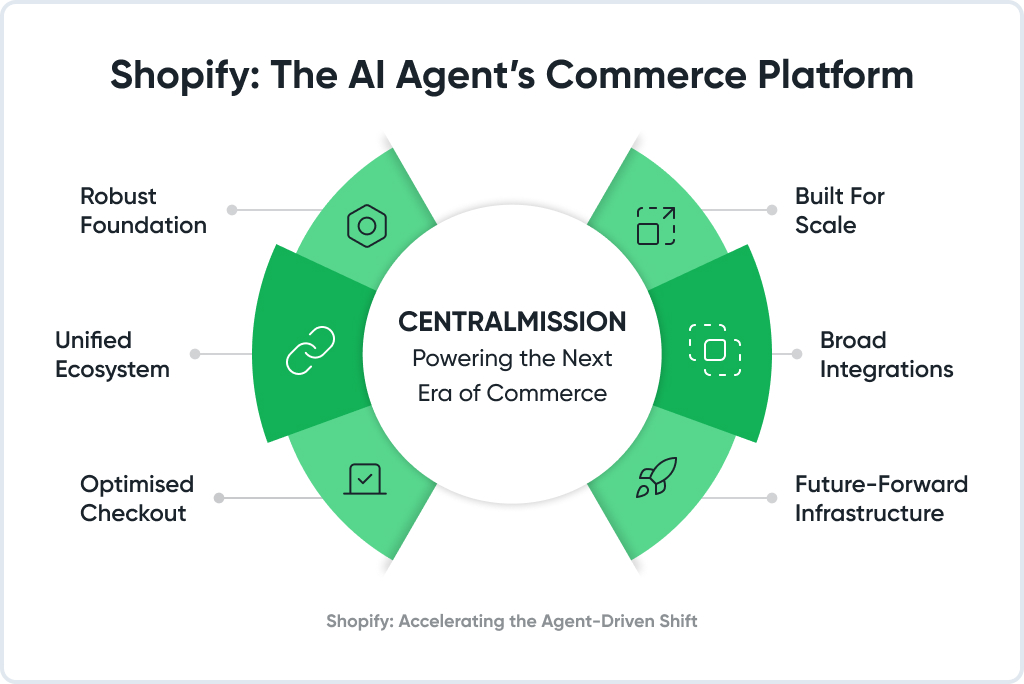
Shopify has been moving toward AI-native store operations for a few years, but 2025 was when the pieces started connecting in ways that matter for day-to-day store management.
Sidekick became more capable in a specific way. When Sidekick launched, it was useful for answering questions about your store and doing single-step tasks inside the admin. What changed over the past year is that it started handling multi-step processes rather than just describing them. Instead of explaining how to set up a discount, it can be set up. Instead of showing you where to find a report, it can pull the relevant numbers and interpret what they suggest. For merchants who spend significant time inside the Shopify admin, that shift in what Sidekick will actually do saves meaningful time.
Shopify Flow moved beyond fixed-condition triggers. Flow has always allowed rule-based automations, the kind where you define a condition and an outcome, and the system executes it when the condition is met. The newer version of that system incorporates behavioral signals rather than just fixed thresholds. A customer who has viewed the same product repeatedly over two weeks gets treated differently from one who landed from a paid ad and browsed for thirty seconds, and the system can make that distinction without you having to define every possible customer type in advance.
Product search started understanding intent. Shopify’s search infrastructure shifted toward semantic understanding of what customers are actually looking for, not just keyword matching. This sounds like a backend detail, but its effect on conversion is direct. Customers who describe what they want in plain language and actually find it are considerably more likely to buy than customers who describe what they want and get either zero results or a page of loosely related items.
Checkout personalization became more granular. Upsell recommendations, discount presentation, and product suggestions at checkout are now informed by what Shopify knows about that specific shopper across their history, rather than just the category they browsed. The difference between a generic upsell and a relevant one is the difference between something customers ignore and something that actually increases average order value.
If you are trying to understand how these pieces work together in an actual store implementation rather than in the abstract, GoMage’s Shopify expertise covers the kind of end-to-end setup where these features start producing measurable results.
What Do These Changes Mean for Store Operations
The benefits of agentic AI in eCommerce are not evenly distributed across every part of running a store. Some areas see a significant impact, and others remain largely unchanged.
Repetitive operational decisions
The category that benefits most immediately is decisions that are not complex but are constant. Reordering inventory when stock drops to a certain level, pausing advertising spend on products that are out of stock, segmenting customers who reach a purchase value threshold, and updating pricing when supplier costs change: none of these tasks requires sophisticated judgment, but together they consume considerable time from someone on your team every single week. When those processes run automatically, the time savings are real and compound quickly.
Personalization without a dedicated data team
Meaningful personalization used to require infrastructure that most independent merchants could not build. You needed customer data consolidated somewhere, a model running against that data, and engineering capacity to feed the results back into your storefront in real time. Shopify’s AI layer gives smaller stores access to a version of that without building the infrastructure from scratch. The scale is different from what a major retailer runs, but the underlying effect, showing the right product to the right customer at the right point in their session, is the same, and the impact on conversion is measurable.
Response time to market conditions
Competitors lowering prices, supply chain disruptions that affect your suppliers before you hear about them, demand spikes that hit earlier in the season than historical data would suggest: these situations benefit from fast detection and fast response. A human team catches most of them eventually, but eventually can mean days. Automated systems watch the relevant signals and catch them in minutes. Over time, that difference in reaction speed adds up.
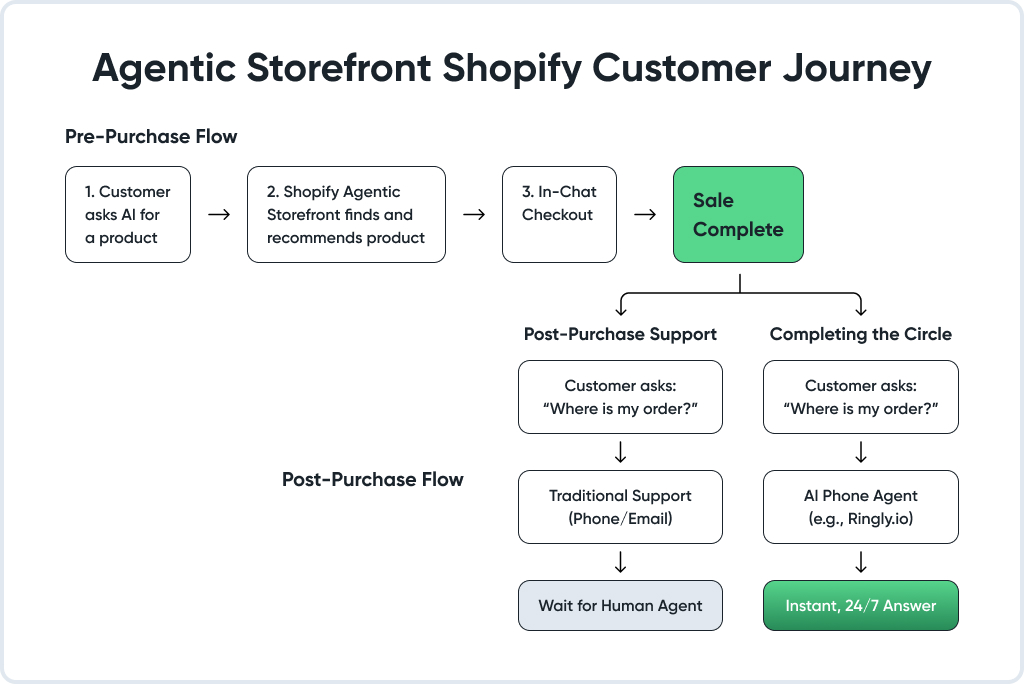
Real Use Cases from Actual Stores
Predictive inventory management. Rather than triggering a reorder alert when stock hits zero or near-zero, agents track sales velocity alongside supplier lead times and flag potential stockouts before they become actual stockouts. In more advanced implementations, the system drafts the purchase order and routes it for human approval, compressing the decision cycle significantly.
Pricing within defined guardrails. For stores operating in competitive categories with many SKUs, manual price monitoring is not realistic. Agents can monitor competitor pricing and demand signals, then adjust prices within floors and ceilings that the merchant defines. The merchant sets the rules about what is acceptable; the agent finds the optimal point within those rules in real time.
Customer support at the first level. Order status inquiries, return policy questions, and basic product specifications make up a large percentage of most support queues and do not require human judgment. Agents handle them consistently and quickly, while escalating situations that genuinely need a person. The result is faster resolution times on simple cases and better focus from human agents on the cases that actually require their attention.
Post-purchase communication based on context. Rather than sending a review request fourteen days after every order, regardless of circumstances, an agentic system can check whether the order was returned, whether the customer reached out to support, and what that interaction looked like, and whether they have purchased again since. The message that goes to a satisfied repeat customer looks quite different from the message that goes to someone who had a difficult experience, and that difference is what makes post-purchase communication feel like genuine follow-through rather than automated box-checking.
The Kitchen Restock case study is a useful concrete reference point for how this kind of implementation performs in practice, with the specifics of a real store rather than a theoretical example.
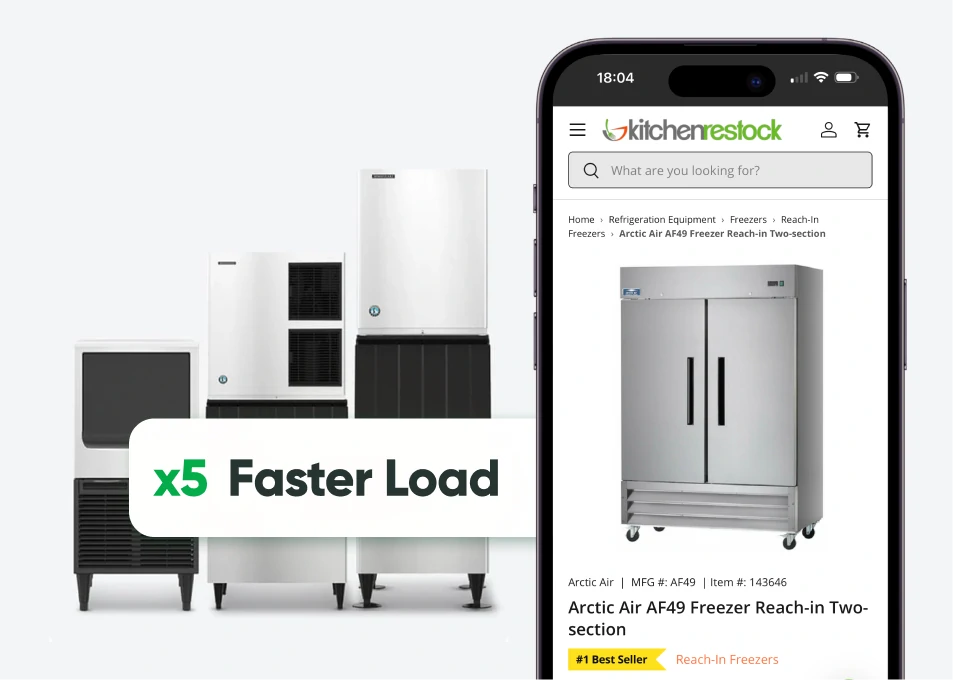
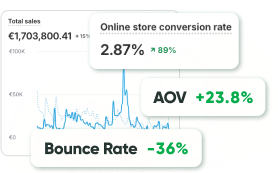
- +25% Less bounces
- +30% More avg duration
- +66% More page views
What Determines Whether This Actually Works
There is a version of agentic AI adoption where a merchant enables every available feature and sees no meaningful change in how the store performs. That outcome is more common than the marketing materials suggest. The stores that get real results from these systems tend to share a few characteristics.
Data quality underneath the features. Agentic systems make decisions based on what they can see, and if what they can see is unreliable, their decisions reflect that. Inconsistent product categorization, customer tags that were applied haphazardly over the years, order history with gaps or duplicates: these are the kinds of problems that cause automated systems to make confident but wrong decisions. Addressing data quality before deploying automation is less exciting than the automation itself, but it is where most of the actual work lives.
Guardrails that match how you want to run the business. An agent optimizing for a metric will optimize for that metric, sometimes at the expense of things you did not think to specify as constraints. Pricing automation needs a floor so it cannot drop below the margin. Email automation needs frequency caps so it does not exhaust your list. Inventory automation needs to account for cash flow, not just sales velocity. These constraints feel obvious in retrospect when something goes wrong; defining them clearly before deployment is considerably easier than debugging afterward.
Clarity about what stays with humans. Agentic AI handles routine decisions well and gets better at patterns over time. What it handles less well is anything where relationship context matters, where the right answer depends on information that lives outside your data systems, or where a mistake has consequences that are difficult to reverse. Knowing which decisions belong in that category and keeping humans in the loop for them is not a concession to the technology’s limitations. It is just good system design.
Where 2026 Takes This
The trajectory over the next twelve to eighteen months is fairly legible. AI is moving from a feature layer on top of existing store operations to something more like the operating layer itself, the system through which merchandising, pricing, inventory, and customer communication decisions get made. Stores that build on that model now will have processes that are faster, more consistent, and cheaper to run than stores that are still doing most of those things manually.
What is harder to predict is exactly where the competitive differentiation shows up. Conversion rate and average order value are the obvious candidates. Retention and repeat purchase rate are probably more significant but take longer to measure. Operational cost per order is real but often invisible until you compare across a meaningful period.
The practical implication for store owners evaluating these tools is that the technology is easier to acquire than the judgment about how to configure it for a specific business. Shopify keeps adding capabilities. What takes time and expertise is understanding how to set up those capabilities for a particular catalog, a particular customer base, and a particular team’s capacity to review and manage what the automated systems are doing. That gap between what is technically available and what is intelligently implemented is where the actual competitive advantage tends to live.
FAQ
It is a real distinction. Standard AI tools respond to a prompt and stop. Agentic systems pursue a goal across multiple steps, checking results and adjusting as they go, without a human prompt at each stage. For a Shopify store, that means the difference between an alert that stock is low and a system that detects the issue, checks supplier lead times, and drafts a reorder before you even see the notification.
Some of it is genuinely useful right now: Sidekick handling multi-step admin tasks, semantic search improving how customers find products, behavioral triggers in Flow reacting to patterns rather than fixed conditions. Fully autonomous store operations with minimal oversight is still more demo than reality for most merchants, but the foundational pieces are functional and improving.
Flow works well for situations you can fully anticipate in advance. Where it falls short is when a single business event requires coordinated actions across several systems at once, or when conditions are ambiguous rather than binary. Agentic systems handle that kind of compound situation without needing a separate rule for every possible scenario.
The features built directly into Shopify, Sidekick, updated search, smarter Flow triggers, are accessible without much setup. More complex work like connecting external data sources or building custom agent workflows does require someone with real technical knowledge. The common mistake is trying to configure everything in-house and not catching when something runs incorrectly.
The merchant is responsible. The system executes within whatever parameters it was given, so wrong decisions are almost always a configuration problem. If automated pricing has no floor and drops a product below margin, that reflects how it was set up, not a judgment the AI made independently. Weekly reviews of what automated systems are actually doing are the practical way to catch those gaps early.
Customers do not know AI is involved, and they should not be able to tell. What they notice is whether product search returns relevant results, whether checkout recommendations feel appropriate rather than random, and whether post-purchase communication reflects their actual order rather than a generic template. Those details are where AI has the most direct effect on how a store feels to shop from.
Data used within Shopify’s AI features is governed by Shopify’s terms and policies. For most merchants selling in the US or Canada, this is not a practical concern. For stores with European customers, it is worth reviewing current GDPR compliance before enabling all available AI features, particularly anything involving behavioral data used for personalization.
Operational time savings from automating repetitive tasks are visible within a few weeks. Conversion improvements from personalization or better search take longer because you need enough sessions to measure reliably, usually four to eight weeks before the numbers mean anything. Turning on multiple features simultaneously makes it harder to know what caused what, so starting with one area at a time is worth the patience.
Treating it as something you configure once and stop thinking about. Agentic systems cannot flag when they have started optimizing for something that no longer matches your priorities. The stores that get consistent value from these tools are the ones with someone checking what the automation is actually doing at regular intervals, not just verifying that it is running.