Google reviews have become one of the most influential factors in local purchasing decisions. Long before a potential customer visits a website or contacts a business, they evaluate star ratings, read recent feedback, and observe how a company responds publicly. For many industries, reviews are now a primary trust signal, not a secondary one.
As a result, businesses can no longer treat reviews as something that happens organically. A structured, ethical, and repeatable review request process is now part of modern customer experience management and local SEO strategy.
This article explains how to ask for Google reviews professionally, without damaging trust, while also improving visibility and conversion performance.
Why Google Reviews Matter Beyond Reputation
Google reviews influence both perception and discoverability.
From a visibility standpoint, review signals contribute to how Google evaluates relevance, authority, and freshness in local search results. From a business perspective, reviews shape expectations before any direct interaction occurs.
Key impacts include:
- Higher placement in local map results
- Improved click through rates from search listings
- Increased trust before first contact
- Stronger brand credibility in competitive markets
Importantly, review quantity alone is not enough. Google evaluates review velocity, sentiment, recency, and consistency across time.
Understanding Customer Behavior Around Reviews
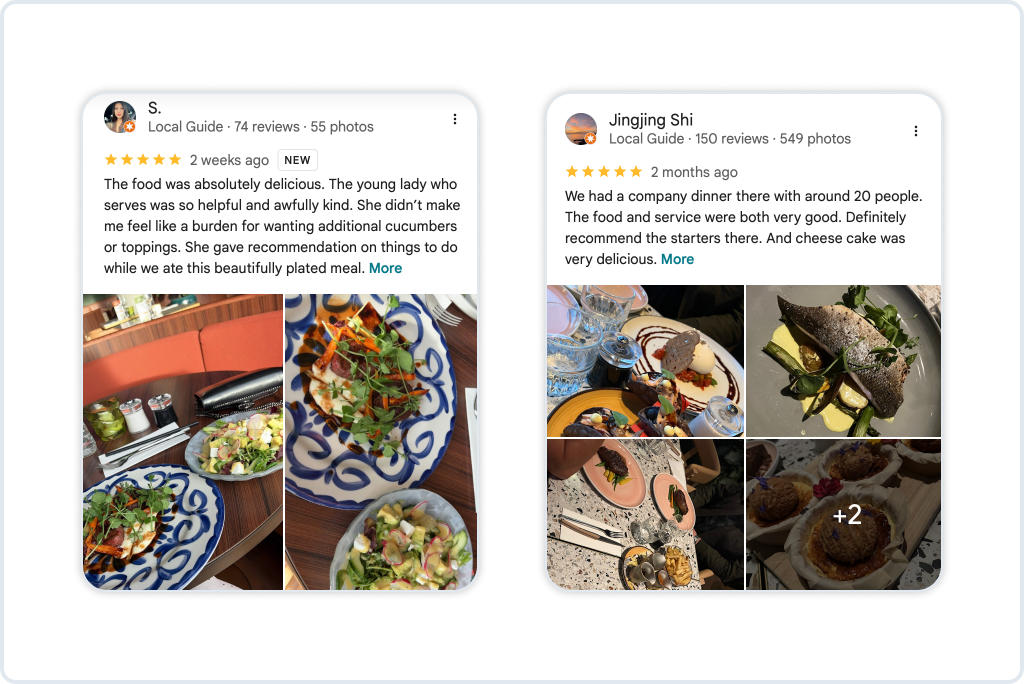
Most satisfied customers do not leave reviews spontaneously. This is not due to reluctance but to cognitive load and timing.
Common behavioral patterns include:
- Customers move on quickly after completing a transaction
- The effort of leaving a review feels unclear or unnecessary
- The moment of satisfaction is short lived
- There is no explicit prompt to act
Businesses that rely solely on organic review generation typically experience slow and uneven growth in review volume.
The Right Timing to Ask for Google Reviews
After Value Has Been Clearly Delivered
The most effective review requests occur after a successful outcome. This may be:
- Completion of a service
- Delivery of a product
- Resolution of a support issue
- Fulfillment of a request
At this stage, the customer has enough context to evaluate the experience.
After a Positive Interaction or Feedback
Verbal or written praise is a strong indicator that a review request will be well received. When a customer expresses satisfaction, the psychological barrier to leaving feedback is already lowered.
At a Natural End Point
Clear journey endings create logical moments for follow up. Asking during an ongoing process often leads to hesitation or inaction.
Avoid requesting reviews:
- During onboarding
- Before outcomes are visible
- While issues remain unresolved
Best Channels for Requesting Google Reviews
Email Based Review Requests
Email remains effective for service based businesses, ecommerce brands, and B2B providers.
Best practices include:
- Referencing the specific service or product
- Using a short and direct message
- Including one clear call to action
- Providing a direct Google review link
Emails should feel like follow ups, not campaigns.
SMS Review Requests
SMS performs well in local and appointment driven businesses due to immediacy.
Effective SMS requests are:
- Sent within hours of the interaction
- Brief and conversational
- Focused on one action only
This channel is best used sparingly to avoid intrusion.
In Person Requests
Face to face requests are effective when phrased neutrally and delivered without pressure.
Staff should be trained to:
- Ask only after positive interactions
- Use simple language
- Avoid justification or persuasion
A single sentence is often sufficient.
Printed and Physical Touchpoints
Receipts, thank you cards, packaging inserts, and signage can support review generation passively.
QR codes reduce friction, especially in offline environments.
How to Create a Google Review Link
A direct review link saves your customer time. Instead of searching for your business again, they land on the review form right away, which usually means more completed reviews.
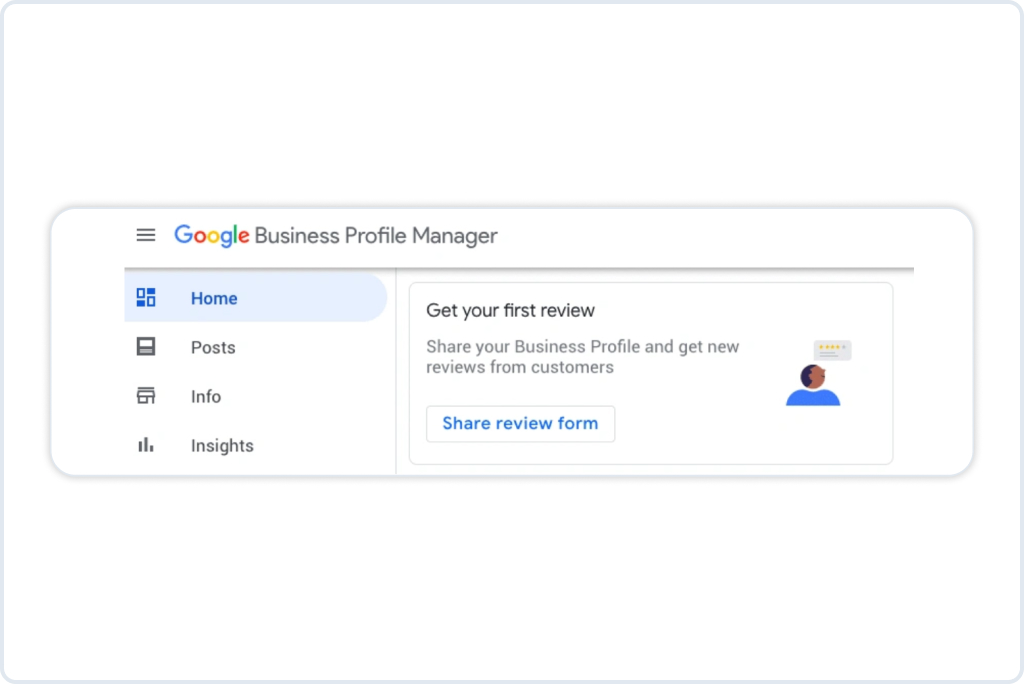
- Create it inside Google Business Profile
- Open your Google Business Profile dashboard.
- Find the area focused on getting more reviews.
- Use the share option for the review form, then copy the link.
- Build it using your Place ID
- Open Google Place ID Finder and locate your business.
- Copy the Place ID.
- Paste it into this URL format.
This approach is convenient when you manage several locations or want a consistent link format.
- Copy it from Google Search
- Search for your business name on Google.
- Click your Business Profile panel.
- Choose Write a review.
- Copy the page URL from your browser.
After you generate the link, reuse the same one everywhere you ask for reviews, including emails, SMS, receipts, QR codes, and thank you pages.
Professional Review Request Templates
Email Template
Hello Name,
Thank you for choosing us for your recent service. If you have a moment, we would appreciate a short Google review. Your feedback helps other customers make informed decisions.
Review link
SMS Template
Thank you for your visit today. If you are comfortable sharing your experience, a quick Google review would be appreciated.
Review link
After Support Resolution
We are glad we could resolve your request. If you have time, would you consider leaving a Google review about your experience?
Review link
These templates are intentionally concise to respect the customer’s time.
Making the Review Process Efficient
Reducing friction is critical.
Best practices include:
- Using a direct Google review URL
- Avoiding redirects or multiple platforms
- Requesting short reviews rather than detailed narratives
- Ensuring the review form opens immediately
Even small obstacles significantly reduce completion rates.
How Google Reviews Influence Local SEO Performance
Ranking Signals
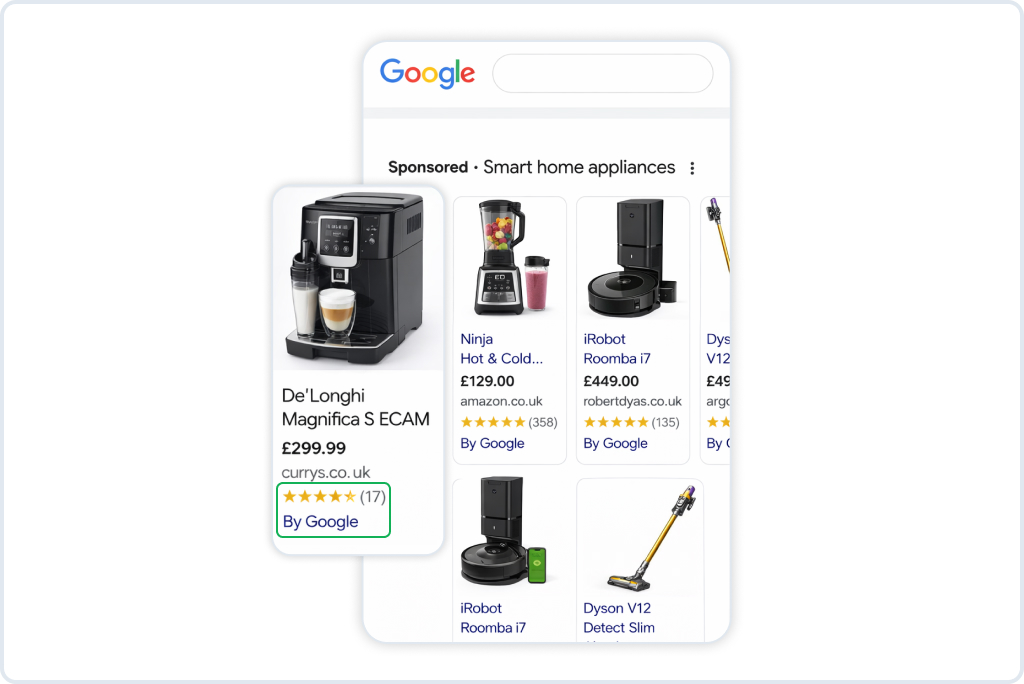
Google uses review data as part of its local ranking algorithm. Frequency and recency signal business activity.
Engagement Metrics
Listings with strong ratings attract more interactions, which further reinforces relevance signals.
Conversion Impact
Positive reviews reduce perceived risk. This leads to higher contact rates, bookings, and store visits.
Brand Recognition
Consistent reviews reinforce brand recall, leading to more branded search queries over time.
Ethical and Policy Considerations
Businesses must avoid:
- Incentivizing reviews with rewards
- Selectively asking only happy customers
- Posting fabricated reviews
- Using third party services that manipulate feedback
These practices violate Google policies and can lead to penalties or loss of trust.
Building a Sustainable Review Strategy
Rather than running one time campaigns, businesses should integrate review requests into standard workflows.
Examples include:
- Automated follow ups after service completion
- CRM triggered review requests
- Staff training at key interaction points
Consistency over time yields more stable results than aggressive bursts.
Final Perspective
Asking for Google reviews is not a marketing trick. It is a structured part of customer experience and digital trust building. When done professionally, review requests feel natural, respectful, and mutually beneficial.
Businesses that approach reviews as an ongoing process, rather than an afterthought, gain long term advantages in visibility, credibility, and customer acquisition.
If you need help designing a compliant, scalable review strategy tailored to your industry and customer journey, this is where experienced guidance makes a measurable difference.
FAQ
Just ask. Seriously, that’s it. After things go well, say, “Mind leaving us a Google review?” Most people don’t find it weird at all. The awkwardness usually comes from you overthinking it.
Right when they’re happy. Just finished the job? Ask them. The product just arrived, and they love it? Perfect time. Wait too long, and they forget, get busy, or just lose interest.
Yeah, use whatever makes sense for your business. Email works if that’s how you normally talk to customers. Text message gets more people to actually do it, especially for things like restaurants or home services. Just don’t overthink which one to use.
No. Google will remove those reviews if it finds out, and you might get penalized. I know it’s tempting, but it’s not worth the risk. Just ask people normally.
There’s no specific number you need to hit. Getting a few reviews every month matters way more than having 100 reviews from 2019. People trust recent feedback, not old stuff.
Reply without getting emotional about it. Say you understand their frustration, explain what happened if needed, and offer to fix it offline. Future customers read these responses and judge you based on how you handle criticism, not just the complaint.
You could, but you shouldn’t. Ask everybody. If you only ask people who will give five stars, your reviews will still look fake. A couple of four-star reviews mixed in actually make people trust you more.
It does help. Google sees you’re engaged with customers. Plus, when people see you respond to reviews, they’re more likely to leave one themselves because they know someone’s actually reading them.
Could be a few things. Sometimes Google just takes a while to post them. Other times, they filter out reviews that look suspicious or come from brand-new accounts. Unfortunately, Google doesn’t always tell you why.
They definitely do. More reviews, especially recent ones, push you higher in local search results. They also make people way more likely to click on your business instead of the one below you. It’s probably one of the biggest factors for local SEO.