If you ask ten marketers what YouTube Advertising cost, you will get ten different answers. Not because people are guessing, but because YouTube pricing reacts to choices you make and to choices viewers make. Two brands can run the same budget and end up paying very different rates, simply because their audience behaves differently or because one video gets skipped faster than the other.
That is the main thing to understand in 2025. You are not buying a fixed slot. You are buying attention inside a platform where people decide what they watch. When they stay, you pay. When they skip, you often do not. That difference can make YouTube feel unpredictable at first, yet it is also why good campaigns become cheaper over time.
So what should you plan for?
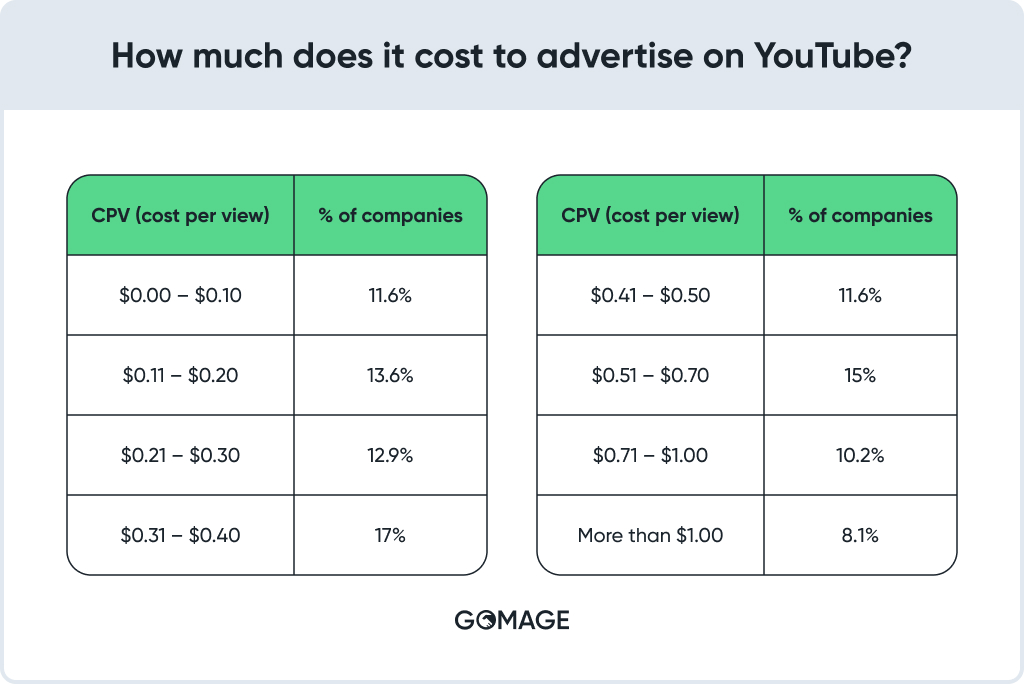
Most campaigns still land in a familiar range. A lot of advertisers see 0.02 to 0.08 USD per view on skippable formats. For impression based formats, 3 to 30 USD per thousand impressions is a common band, depending on the market and the audience. Those numbers move up fast in categories like finance, SaaS, healthcare, and ecommerce during busy seasons. They can also drop when the creative clicks with viewers and the targeting is not overly narrow.
Here is a quick reality check that saves money. A cheap view is not always a good view. If people watch for two seconds and leave, the price looks great and the results usually do not. A slightly higher cost with stronger watch time often wins, especially when the goal is to build trust or explain something that needs context.
YouTube Ad Types and How Pricing Usually Works
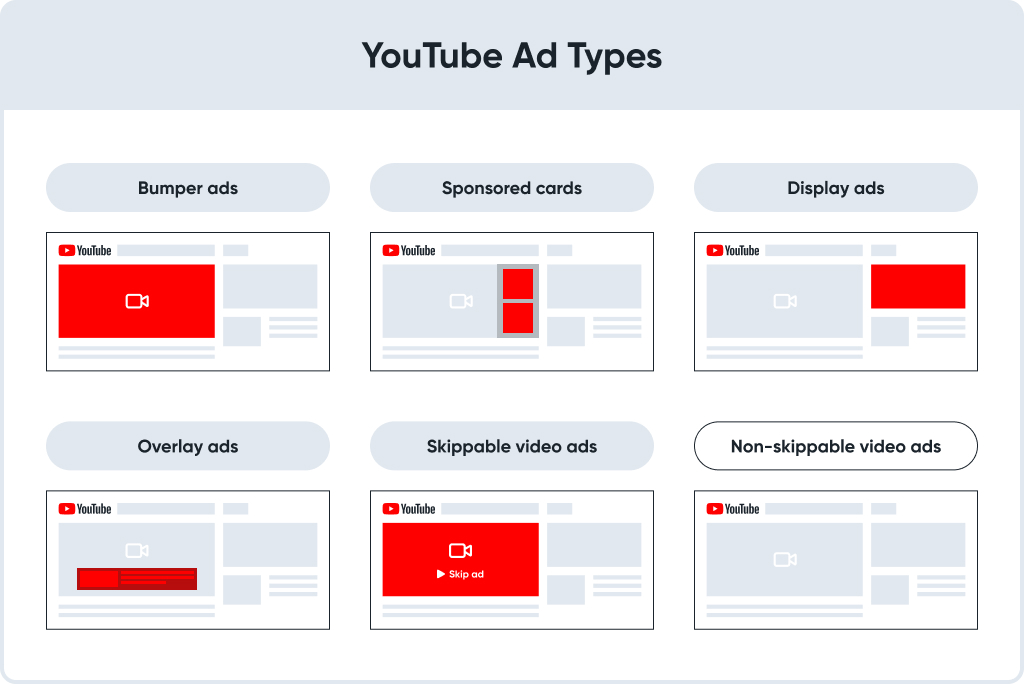
YouTube gives you several formats, but they do not behave the same. Picking the wrong one can make a campaign feel expensive even with good targeting.
Display ads
These appear next to the video player on the desktop. They do not interrupt viewing and stay visible while the video plays. Often used for brand awareness, retargeting, or driving traffic to a landing page. Performance depends heavily on visual clarity and relevance.
Overlay ads
Semi transparent banners shown at the bottom of a video. Viewers can close them at any time. This format works best for simple messages, promotions, or reminders. Pricing is usually based on impressions or clicks, making it a lighter entry option.
Sponsored cards
Small interactive cards that appear inside the video at specific moments. They can highlight products, features, or related links. Useful for ecommerce and product focused campaigns where timing and context matter more than volume.
Non video discovery ads
These placements show up across YouTube surfaces without autoplay. They rely on headlines and visuals to attract clicks. Often used to support longer content like demos, reviews, or educational videos.
Shorts ads
Vertical video ads placed between YouTube Shorts. They blend into the feed and rely on fast pacing and native style. Best suited for mobile first campaigns and brands targeting younger audiences.
What Actually Drives YouTube Advertising Cost
You will see the same factors mentioned everywhere, but the way they play out on YouTube has its own flavour.
Audience size and focus
Broad audiences usually cost less. Tight filters sound smart, but they often raise prices and slow learning. Many campaigns start wide, then narrow based on real performance.
Competition in your category
Some industries bid aggressively because one customer can be worth a lot. That pressure shows up in CPM and CPV.
Country and language
High income regions tend to cost more. Local campaigns can be surprisingly efficient if the message fits the market.
Creative quality
This is the big one. YouTube punishes boring openings. It rewards videos that keep people watching. You feel that reward in your costs.
Your objective
Awareness, traffic, and conversion campaigns optimize differently. Conversion focused setups often cost more, but they can also waste less if tracking and landing pages are solid.
How to Spend Less Without Making the Campaign Worse
Lower cost is not a bidding trick. Most of the savings come from the basics done well.
- Start with one job for the ad. One message, one next step.
- Treat the first five seconds as the real ad. Everything else is a bonus.
- Run a few variations that change the opening only. You will learn faster.
- Avoid stacking too many targeting layers early. Let the system find patterns.
- Watch frequency. Repeating the same ad to the same people gets expensive.
One more thing that often helps. If your landing page does not match the promise of the video, YouTube can still give you views, but conversions will disappoint. Fixing the page can lower your effective cost more than any campaign tweak.
Quick Guide to Setting Up YouTube Ads in 2025
- Pick One Goal: Awareness, traffic, leads, or sales. Do not mix goals in the same first campaign.
- Choose One Ad Type: Skippable In Stream for storytelling, In Feed for search intent, Bumper for recall, Shorts for mobile reach.
- Prep the Creative: Hook in the first five seconds, show the product early, captions on, clear call to action.
- Create the Campaign in Google Ads: New campaign, Video, select objective, set budget, choose bidding like CPV or CPM.
- Set Targeting: Start broad, then refine. Use remarketing if you have site traffic or a channel audience.
- Launch and Wait a Few Days: Avoid daily tweaks. Let it run long enough to collect real data.
- Check the Right Metrics: View rate and watch time for awareness, clicks for traffic, conversions and assisted conversions for sales.
- Optimise with Small Changes: Test new openings, swap audiences, refresh creatives before fatigue.
Is YouTube Worth Paying For in 2026?
For products that need explanation or credibility, YouTube is hard to beat. People give you more time. They also remember more. That makes it useful for SaaS, services, education, healthcare, and many ecommerce categories where a quick image ad is not enough.
If you want instant sales with a weak offer, YouTube will feel expensive. If the message is strong and the funnel is clean, it can scale well and stay stable.
FAQ
Many advertisers see 0.02 to 0.08 USD per view for skippable ads, and 3 to 30 USD per thousand impressions for impression based formats. Your actual cost depends on the audience, market competition, and how viewers respond to your creativity.
You can start small, but meaningful testing usually needs enough daily spend to generate consistent data. Many businesses begin around 20 to 50 USD per day when the goal is learning and optimisation, not only awareness.
Three common reasons show up again and again. The audience is too narrow, the category is highly competitive, or the opening seconds of the video are not holding attention. Creative fatigue can also push costs up after a few weeks.
Most YouTube formats charge per view or per thousand impressions, not per click. Clicks still matter, but pricing usually follows attention first.
Yes, especially when you can show the product clearly, answer objections, and build trust quickly. Remarketing also plays a big role, because many people do not buy the first time they see an ad.
Start with creativity. Improve the first five seconds, tighten the message, and test new openings. Then revisit targeting. Over targeting is a quiet budget killer, especially early on.