Search behaviour is changing faster than anyone expected. A few years ago people still relied on blue links and traditional rankings, yet today many users receive fully generated answers without opening a single website. The shift is not subtle. It is measurable.
According to Gartner’s Emerging Tech Report 2024, almost 30% of all search sessions already involve some form of generative response, and the share is growing as platforms such as Google SGE, Perplexity, and ChatGPT Search expand their reach.
This change pushes companies to rethink how their content is discovered and how their brand appears inside AI-generated summaries. Generative engines do not simply index pages. They read, interpret, understand context, and rebuild information in their own words. GEO, or Generative Engine Optimization, has emerged from this new reality, and it is quickly becoming the layer that determines how visible a business is in an environment shaped by machine-written answers rather than ranked lists.
What Generative Engine Optimization Actually Means
GEO is not a replacement for SEO. It is a layer that sits above it and changes the way content interacts with systems that generate their own answers. Traditional search engines scan keywords and structure. Generative engines interpret meaning, intent, tone, and credibility. Because of that, content needs to be written and structured in a way that an AI model can confidently use it as part of an answer.
Instead of focusing only on ranking positions, GEO focuses on how often a brand appears in AI-generated summaries. When a user types a question into an SGE result or an AI search platform, the model gathers information from multiple pages and rebuilds it into a single output. The goal of GEO is to ensure your content becomes part of that output and is not lost in the background.
A large part of this work relates to clarity. Pages must be easy for generative models to interpret. That includes clean structure, well-explained facts, and content that mirrors how real people ask questions. Another part relates to authority. Generative engines prefer sources that look trustworthy and complete, which means companies must create content that shows expertise rather than surface-level statements.
In simple terms, GEO prepares your website for a world where users read answers written by AI instead of browsing dozens of links. It helps your content remain visible even when search formats continue to evolve.
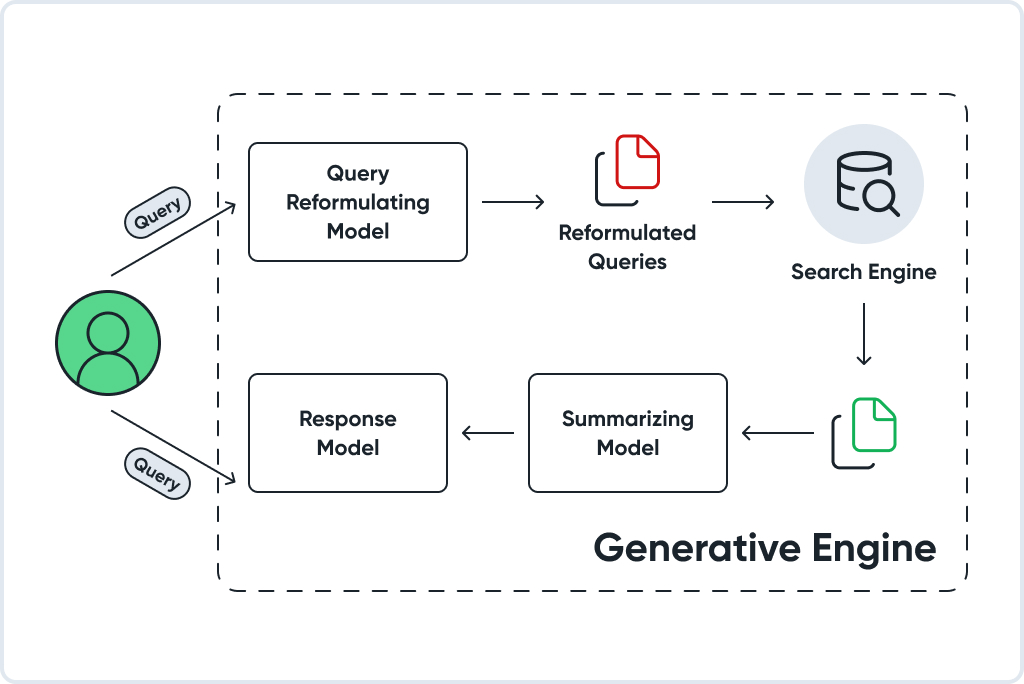
How GEO Is Changing the Future of Search
- Search results become conversations, not link lists
People expect direct answers, so generative systems summarise information instead of sending users through multiple pages. - Context matters more than keyword matching
Models evaluate whether the content actually understands the topic, not whether it repeats search terms. - Authority signals are broader and more nuanced
Generative engines look for clarity, consistency, original insight, and alignment with trusted sources across the web. - Brand visibility depends on being part of the AI summary
If your content is not used inside the generated response, strong rankings matter far less. - Structure influences selection
Pages written with natural flow, clear explanations, and question-style headings are easier for models to process and reuse. - User behaviour shifts expectations
Most people stop scrolling once the AI provides a good answer, which raises the stakes for appearing in that first summary. - Quality outweighs volume
Thin content loses relevance quickly because generative engines prioritise depth and usefulness. - Fresh updates carry more weight
Models favour information that reflects current trends and accurate data, making outdated pages drop in visibility fast.
Practical Strategies for Implementing GEO in Your SEO Campaigns
Write for real questions, not isolated keywords
People speak naturally when using AI search. Content that mirrors everyday language and responds to full, specific questions becomes far more useful to generative engines.
Prioritise clarity over cleverness
Models pick up well structured explanations faster than poetic or overly complex writing. Short definitions, direct answers, and clear reasoning help your content appear in generated summaries.
Make your expertise visible across multiple sources
Generative systems cross check information. When your brand appears consistently in articles, interviews, research pieces, and product documentation, it becomes a stronger candidate for AI generated responses.
Use structured elements that AI can interpret easily
Sections like “How it works”, “Key benefits”, and “Common questions” give models clean anchors that help them extract meaning without confusion.
Refresh important pages regularly
AI search engines notice outdated information quickly. Updating statistics, examples, and product details keeps your content relevant and easier to use inside summaries.
Support claims with evidence
Screenshots, quotes, data, and citations show that the information is factual. Models rely on these signals when deciding which sources look trustworthy.
Create content with a narrative rather than a list of facts
Generative engines favour writing that explains the “why” behind information. Pages that connect ideas naturally tend to appear more often in summaries.
Focus on content that teaches
Tutorials, deep dives, comparisons, and practical walkthroughs are easier for AI to understand and summarise than shallow overviews.
Ensure your brand is mentioned accurately across external platforms
Directories, knowledge bases, industry forums, and press mentions all contribute to your “semantic identity”, which generative engines use to validate your credibility.
Test your content inside generative tools
Search your own topics in SGE, Perplexity, or ChatGPT Search. You will quickly see which parts of your content models prefer or ignore, which helps refine your strategy.

Why GEO Is Becoming the Center of Modern Search
Search is drifting into a new phase, and GEO sits right at the centre of that shift. Instead of treating results like a competition for first place, generative engines build an answer from many sources at once. This creates a different kind of visibility, one where your content needs to be selected as part of the story the model tells.
One reason GEO matters is that people increasingly expect instant clarity. They type questions the same way they would ask a colleague, and they want a clear response immediately. Generative systems deliver that experience, which means the content that fits naturally into these answers becomes far more valuable.
Another reason is the way AI interprets information. Models evaluate tone, structure, and coherence. They reward pages that explain ideas cleanly and give users a sense of confidence. Thin content moves aside because it leaves models with nothing meaningful to summarise.
Authority also plays a stronger role than before. A brand mentioned across several trusted sources is easier for generative engines to rely on. Search becomes less about isolated pages and more about a consistent presence across the web.
GEO also reflects how people speak today. Long questions, comparisons, uncertain phrasing, and detailed prompts are now normal. Content that mirrors this style feels more relevant and more helpful, which in turn makes it easier for AI systems to extract good answers.
All of this points to the same conclusion. The future of search belongs to brands that write clearly, demonstrate expertise, and create information that AI can understand without confusion. GEO simply prepares your content for that environment.
Common Mistakes Companies Make When Approaching GEO
- Writing for algorithms instead of people
Some teams over-optimise and lose clarity. Generative engines prefer content that sounds natural and genuinely helpful. - Keeping all authority signals on a single website
If a brand has no presence in interviews, industry articles, expert forums, or data reports, AI systems struggle to verify credibility. - Ignoring structure and readability
Walls of text without clear sections make it difficult for generative engines to understand the flow of ideas. - Leaving outdated information untouched
Old statistics, expired claims, and stale examples quickly reduce a page’s usefulness in AI-driven summaries. - Treating content as a one-time effort
GEO rewards continuous improvement. Many companies publish once and never revisit their pages. - Skipping real-world testing
A simple search in SGE, Perplexity, or ChatGPT Search often reveals which parts of the content models ignore or misunderstand. - Using identical tone across all pages
Generative engines look for clarity and authenticity, not uniform marketing language that feels generic. - Overlooking user intent
Content that answers half the question or avoids explaining the “why” behind a concept rarely makes it into generated responses. - Focusing only on long articles
Generative engines value concise knowledge as much as long-form content. Many brands forget to balance both. - Assuming traditional SEO alone is enough
Ranking well does not guarantee visibility inside generative summaries. GEO needs its own strategy.
Conclusion
Search is moving into a new chapter, and GEO sits at the center of that shift. People now turn to generative systems for complete answers, not long lists of links, which means the way brands show up online has to evolve. Visibility depends on clarity, relevance, and the trust a model places in your content. The businesses that understand this new landscape will stay visible even as search keeps transforming.
GEO is not complicated once you see how it fits into real behaviour. When your content speaks to users in a natural way and offers something genuinely useful, generative engines tend to pick it up. When your brand is visible across multiple sources and your information stays fresh, the model has more confidence in using what you publish. It is a shift toward quality and expertise, not shortcuts.
FAQ
GEO focuses on how generative engines read, interpret, and summarise information, while SEO focuses on ranking pages in search results.
They read them, but the model pays more attention to clarity, context, and how well the content answers a real question.
No. SEO remains essential, and GEO builds on top of it to improve visibility inside AI generated summaries.
Try searching your topics in tools like SGE, Perplexity, or ChatGPT Search. If your content does not appear in the summaries, it likely needs refinement.
Not necessarily. Many pages only need clearer structure, updated information, or a more natural way of answering questions.
Generative engines cross check information. When your brand appears in trusted sources, the model is more likely to use your content.
Not always. Short, well explained sections are easier for AI to summarise than long, unfocused pages.
Regularly. Generative engines prioritise accurate and current information, especially when topics change quickly.
Yes. Models care more about clarity and usefulness than brand size.