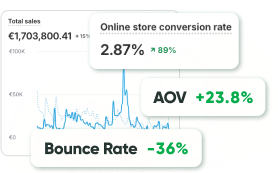
Many websites welcome a steady flow of visitors yet only a small slice becomes customers. CRO transforms visitor traffic and closes that gap by studying real behaviour and improving the path to purchase. The method feels like continuous store tidying: clearer headlines, faster load times, and reassuring proof, each update removing a specific barrier.
Any serious plan for conversion optimization for higher revenue starts with evidence. Scroll depth reports, interview notes, and purchase funnels show where attention slips away. Replace heavy graphics with concise copy or add a clear call to action, and the numbers begin to shift.
Teams that rely on CRO techniques to turn traffic into sales measure every change against a control. Small gains, recorded week after week, compound into meaningful profit and protect marketing budgets.
Boosting Revenue with CRO: Techniques That Convert Traffic Into Sales
Think about this for a second. You’ve got 1,000 visitors coming to your site each month. If 2% buy something, that’s 20 customers. Pretty standard, right?
Now imagine bumping that up to just 4%. Same traffic, but now you’ve got 40 customers. You literally just doubled your business without changing anything else.
Most entrepreneurs get obsessed with traffic numbers. More visitors must equal more sales, right? Wrong. I’ve worked with companies getting 50,000 monthly visitors who were making less money than competitors with 5,000 visitors. The difference? Conversion rates.
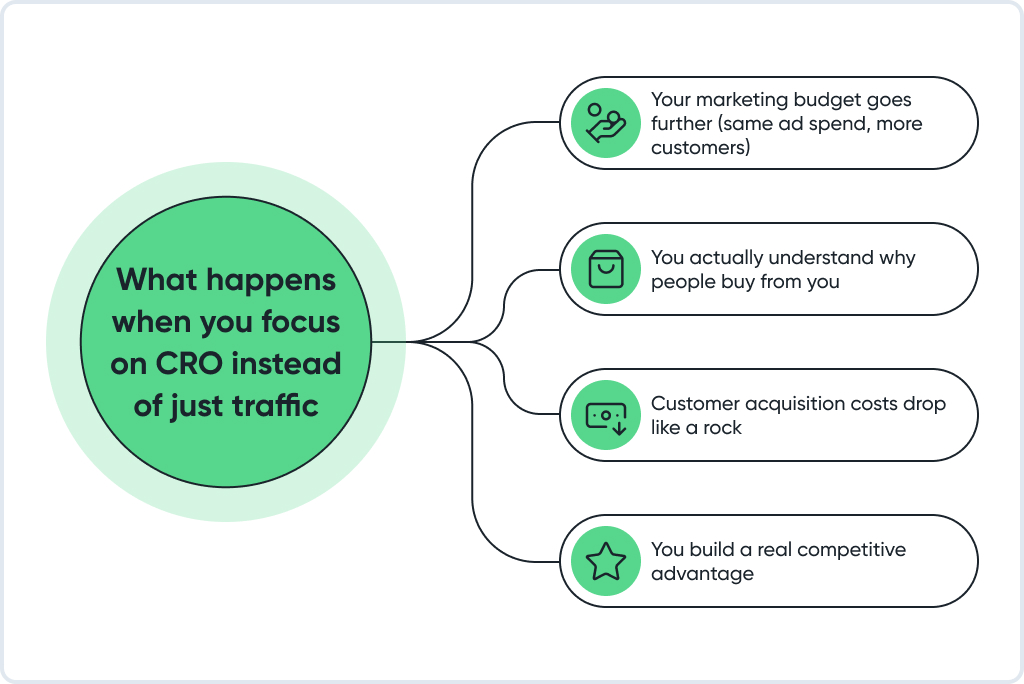
The math is simple. Doubling your traffic costs money. Doubling your conversion rate? That’s mostly about fixing what’s already broken.
The Role of CRO in Enhancing Conversion Rates and Driving Profit
The GoMage team ran hundreds of conversion tests, and some results still surprise us. The stuff that looks “professional” often converts terribly. The changes that seem minor can boost sales by 50%.
Here’s what we have learned:
Your headline matters more than your entire homepage design. People decide whether to stay or leave in about 3 seconds. If they can’t instantly figure out what you sell and why they should care, game over.
Button colors? Overrated. Button copy? Huge difference. “Buy Now” versus “Get Started” can change everything. “Add to Cart” versus “Yes, I Want This” can double click-through rates.
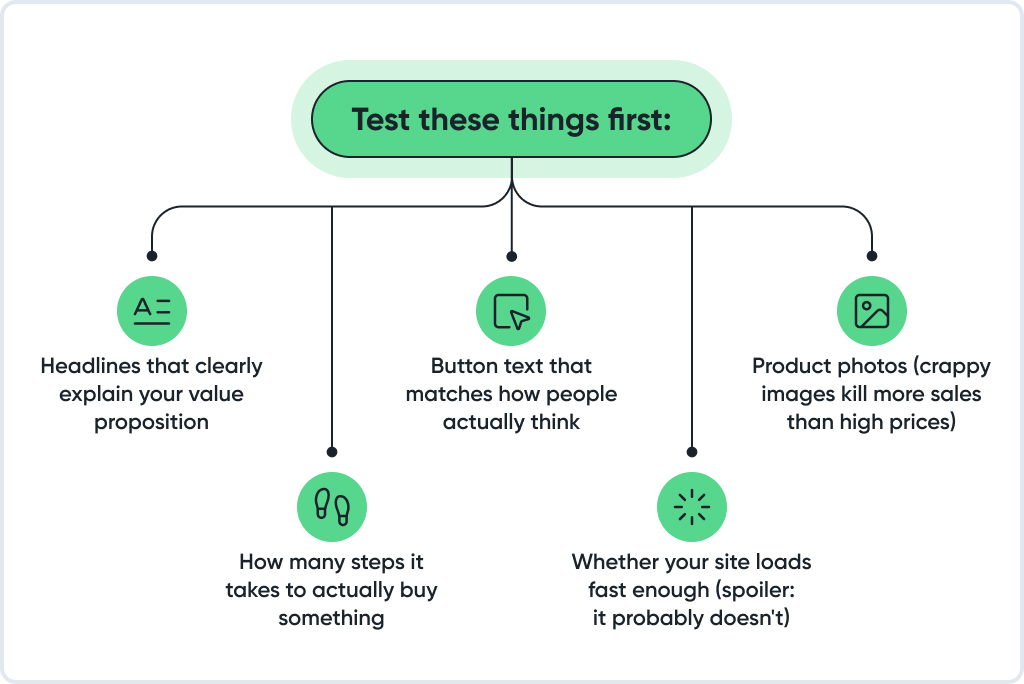
Speed kills conversions faster than almost anything else. Amazon loses 1% of sales for every 100 milliseconds of delay. Think about that. Your slow server could be costing you thousands every month.
How CRO Strategies Can Help You Maximize Your Website’s Potential
Shopping cart abandonment is brutal. About 70% of people who add something to their cart never actually buy it. Why? Usually because checking out turns into some kind of obstacle course.
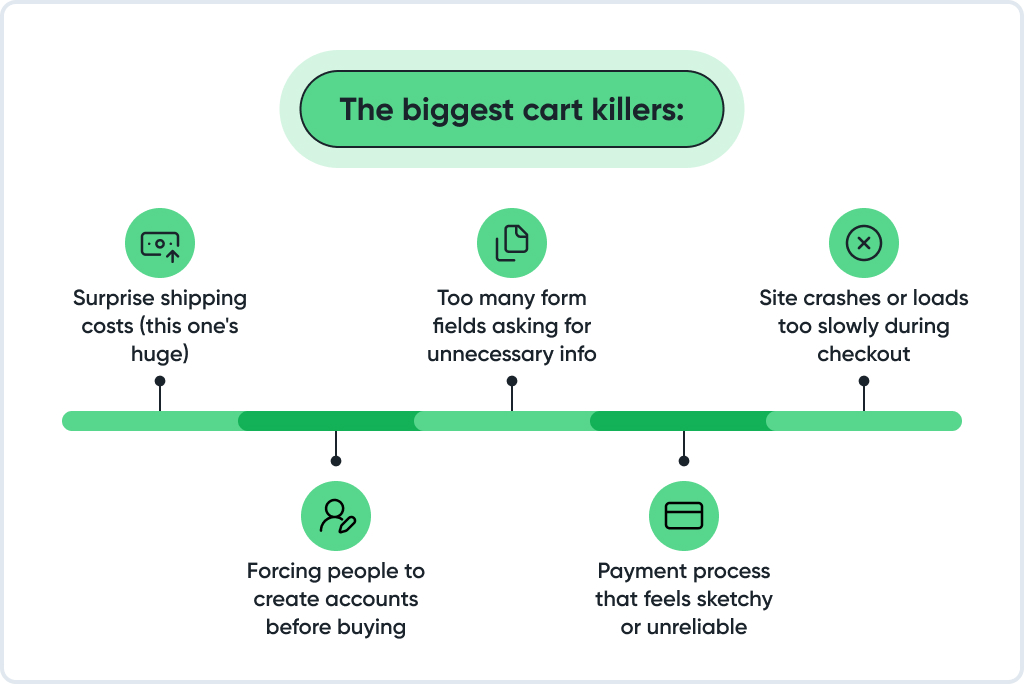
The lesson? Make buying stupidly easy. If your grandma can’t figure out how to purchase from your site in under 30 seconds, you’re losing money.
- Begin with honest observation. Heatmaps, on‑site polls, and short interviews reveal the moments when interest fades. Those findings point directly to CRO strategies to increase conversions.
- Turn every insight into a clear experiment. Swap a vague headline for a promise that answers the visitor’s first question, or move a long form below the fold to reduce early friction.
- Prove value before asking for payment. A short testimonial video near the Add to Cart button often lifts trust. Money‑back guarantees and well‑known security logos reinforce the same promise.
- Polish performance. Compress images, remove unused code, and defer heavy scripts. Faster pages keep visitors on site long enough to act and form the backbone of strong website conversion strategies.
- Keep the journey moving. Subtle prompts such as progress bars in checkout or low‑stock notices guide shoppers forward without pressure. Personalised cross‑sells can boost average order value at the same time.
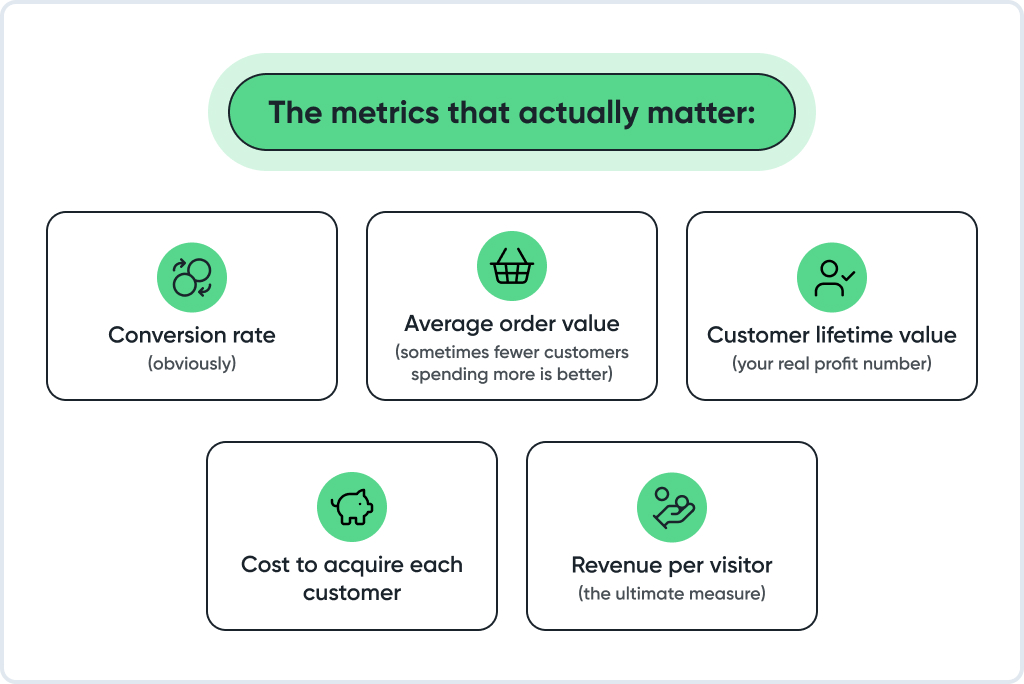
- Focus on the metrics that matter. Track conversion rate, revenue per visitor, and average order value so every discussion links back to tangible profit.
- Store each lesson. Record what worked, what under-performed, and why, and learn from insights shared by the best CRO agencies to refine your testing approach over time. Feeding those notes into the next sprint shows in real numbers how CRO strategies can help you maximize your website’s potential while marketing spend stays level.

- +51.4% conversions
- +59.1% revenue per visitor
- -26% cart abandonment
CRO for eCommerce: A Powerful Tool for Turning Visitors Into Loyal Buyers
Once you fix the obvious stuff, you can get creative. This is where things get interesting.
Personalization is incredibly powerful when done right. Not the cheesy “Hi John!” stuff, but actually showing different content based on what people do on your site. First-time visitors see different messages than returning customers. People from different cities get location-specific offers.
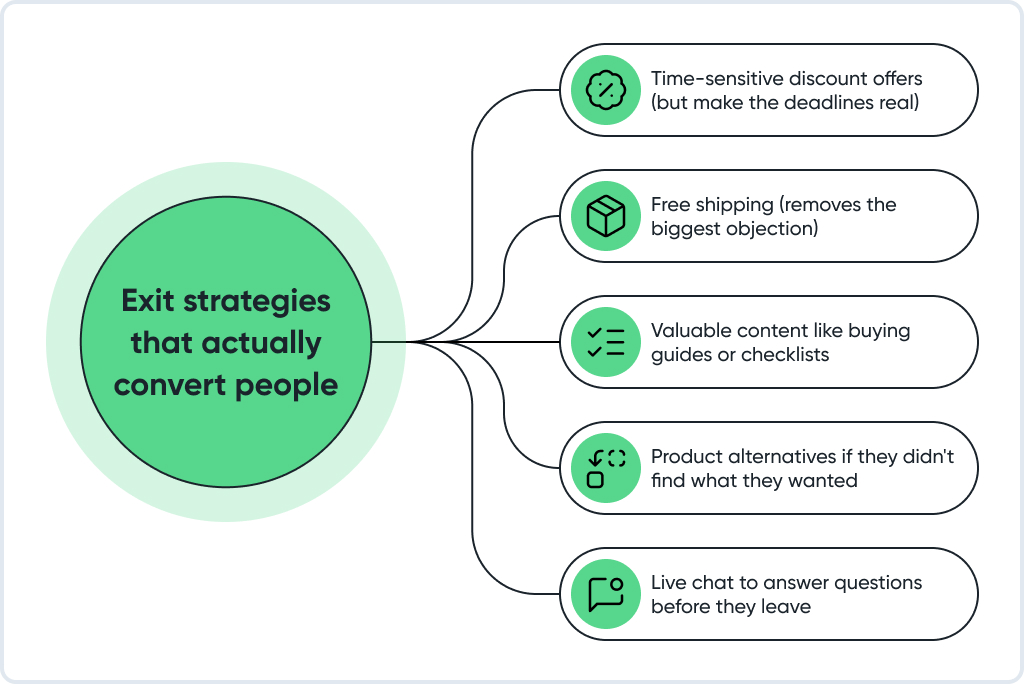
Exit-intent popups have a bad reputation, but they work if you’re not annoying about it. The trick is offering genuine value, not just begging people to stay.
Mobile is everything now. More people shop on phones than computers, but most websites still suck on mobile. Big buttons, fast loading, simple navigation. If your mobile experience is frustrating, you’re basically throwing away half your potential sales.
Retargeting brings back the 97% who didn’t convert the first time. Show them what they looked at. Offer a small discount. Share customer success stories. Give them new reasons to reconsider.
How to Actually Measure This CRO Stuff
Data can get overwhelming fast. Bounce rates, click-through rates, time on page, conversion funnels. It’s easy to get lost in numbers that don’t actually matter.
Focus on revenue per visitor. That’s the number that tells you if your optimization efforts are working or not.
Don’t make changes based on tiny sample sizes. I see this mistake constantly. Someone runs a test for three days with 50 visitors and thinks they’ve discovered something profound. Wait until you have enough data to be confident in your results.
What works for other businesses might bomb for yours. I’ve seen identical tests produce completely opposite results for similar companies. Always test everything yourself.
Let’s Be Real About What CRO Can and Can’t Do
CRO isn’t magic. It won’t fix a terrible product or make an overpriced service sell like hotcakes. It won’t turn complex B2B sales into impulse purchases. And it definitely won’t work overnight.
What CRO does is help you get the most out of what you already have. Good product plus decent traffic plus optimized experience equals significantly more sales.
The businesses that win with this stuff treat it like a long-term strategy, not a quick fix. They test consistently, measure carefully, and keep improving over time.
Your competitors are probably making the same mistake right now. They’re burning cash on ads while you could be quietly doubling your revenue from the exact same amount of traffic.
Stop leaving money on the table. Start converting the visitors you already have with the GoMage team.
FAQ
Depends on your traffic and what you change. Small tweaks might show results in a couple weeks if you get decent traffic. Bigger improvements usually take a few months. Don’t expect miracles overnight. Good CRO is like working out. You see results from being consistent, not from trying something once.
Nope, totally different thing. A beautiful website that doesn’t convert is just expensive decoration. CRO focuses on getting people to actually do something: buy your product, sign up for your service, contact you for a quote. Sometimes that means making things less pretty but more functional. Pretty doesn’t pay your bills.
It really depends on how serious you want to get. You can start with free tools like Google Analytics and basic testing for maybe $50-100 per month. Most small businesses spend somewhere between $500-2000 monthly when they really commit to it. The return on investment usually covers the cost pretty quickly if you do it right.
Product pages are huge. Better photos, customer reviews, clear pricing. Simplifying your checkout process is probably the biggest win most stores can get. Those exit popups work well too. Mobile optimization isn’t optional anymore. But honestly, what works best really depends on where your customers are getting stuck in your specific buying process.
Changing everything at once. I see this constantly. Someone redesigns their whole website and then wonders why sales dropped. You can’t tell what helped and what hurt. Test one thing at a time, even though it feels slow. Also, assuming what worked for someone else’s business will work for yours. Every business is different. Test everything yourself.
Most shops convert between 2 percent and 4 percent of visitors. Stores that sell niche items or offer an outstanding user experience can climb higher, while crowded markets may sit lower. Track your own baseline first, then aim for steady progress rather than a single magic number.
If traffic volume is solid, the first clear lifts often appear four to six weeks after the initial test goes live. Broader gains, such as higher average order value or repeat purchase rate, usually surface over several test cycles, so plan for one to three quarters before judging long‑term impact.
Begin with conversion rate, revenue per visitor, and average order value. Add bounce rate and cart abandonment when you want a deeper funnel view. Subscription businesses should also keep an eye on lifetime value.
Yes. Many early wins come from rewriting headlines, rearranging page elements, and improving page speed, all of which can be handled with visual editors or low‑code tools. Development help becomes useful once you tackle larger structural changes.
Any page with a clear goal can gain from optimization. Lead generation forms, booking flows, and SaaS free trials all respond well to the same research‑test‑learn cycle.
AB testing is one step in a larger CRO framework. Conversion work begins with research, moves through test design, and ends with analysis and iteration. Testing proves the change, but it is not the whole process.
No, the two disciplines usually support each other. Faster load times, clearer content hierarchy, and stronger engagement signals help conversions and organic rankings alike. Just preserve structured data and internal links when you change layouts.
Heat‑mapping and session‑recording platforms such as Hotjar or Microsoft Clarity show behaviour patterns. Google Analytics or GA4 supplies the quantitative view. For live split tests, Google Optimize, VWO can launch new variations without heavy coding.
Targeted messages often lift engagement, yet blanket changes can disappoint if segments are poorly defined. Start with clear audience groups, test small adjustments, and measure impact before rolling wider.
Keep at least one live test in place so insights arrive continuously. Prioritise ideas by expected business impact and ease of launch, then rotate through them to maintain momentum.